In this report, we answer the question, Has retiring in Buenos Aires become too expensive?
I was last in Buenos Aires 17 years ago. At that time, it was easily my favorite city in South America. I still love it today. But loving a place is a different question from affordability.
I love Tokyo, London, Berlin, and New York, but nobody is calling those places affordable. So, I enjoy visiting for a few days on my way to somewhere within my retirement slow travel budget.
Lately, Buenos Aires has been accused of being unaffordable. But it was affordable 17 years ago, so I wanted to see for myself. So, during our retirement affordability tour of South America, we spent a month in Buenos Aires.
So, we flew from Florianópolis, Brazil, to Buenos Aires. Our ride from the airport to the Palermo neighborhood of Buenos Aires had the same Decadent Elegance it had 17 years ago, which makes sense.
These gorgeous ancient buildings are too beautiful to tear down, and gentrification moves slowly even in neighborhoods like Palermo, where almost everyone prefers the charm of ancient architecture to steel-and-glass high-rises.
Buenos Aires is called the most European city in the Americas. That characterization includes an appreciation for history and the gritty sophistication of urban experiences in historic districts like San Telmo or La Boca.
I will let you decide whether your budget and retirement plan justify the following estimated costs for retiring in Buenos Aires. I show you the video that Qiang and I took with our feet on the ground here over the last 30 days. There is no AI in this video.
Subscribe if you want to get my feet-on-the-ground reports of the best affordable places to retire overseas. Visit my country playlists on YouTube to learn about my favorite places to retire affordably overseas.
Before talking about Buenos Aires affordability, give me a couple of minutes to show you why we love this city so much.
Things to Do in Buenos Aires
Here is our Google Map of our favorite daytime sightseeing in Buenos Aires. Do not try to do this all in one day. We use Uber and buses to get around the city.
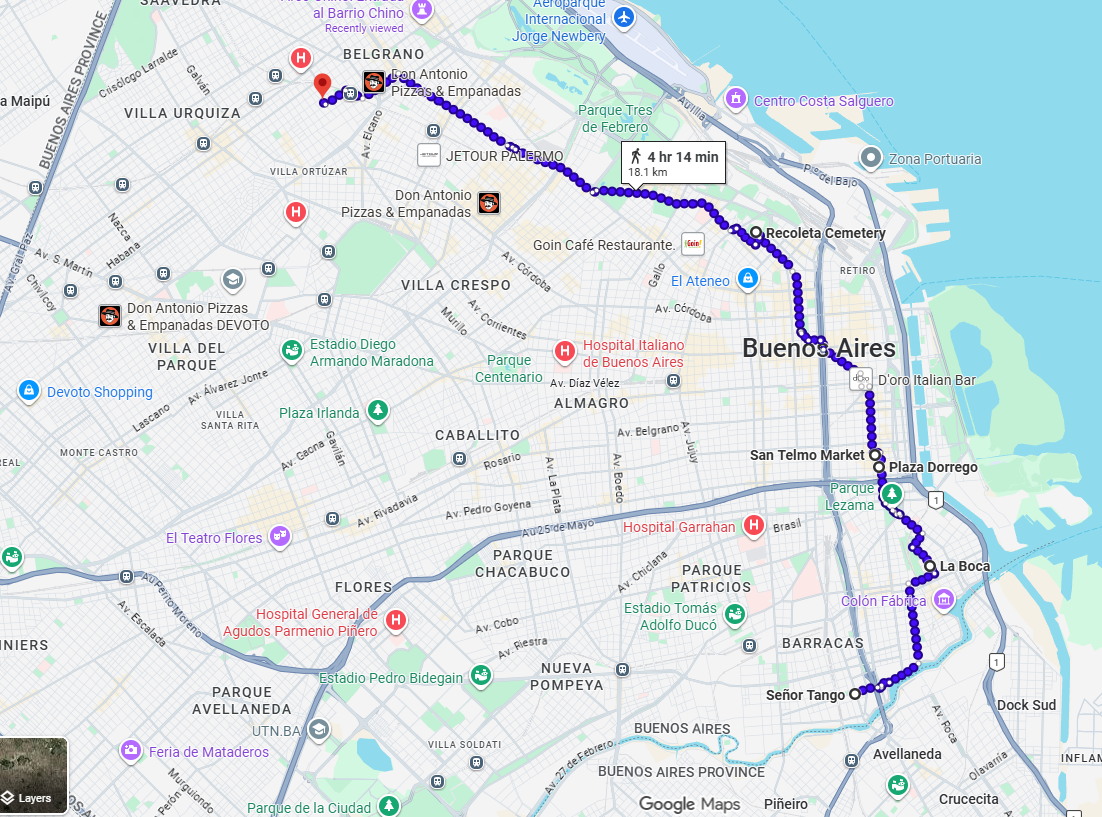
Señor Tango: We picked this Tango theatre because it was priced right and the stage is in the center of the theater, so you can see the dancers well from every seat in the house. Also, the Broadway-style experience includes traditional Argentine Tango, modernized athletic Tango nuances, Gaucho Dancers, spinning boleadoras, and other folk dancers, all in appropriate, sexy costumes. I would not recommend the dinner before the show. Just have a nice dinner elsewhere, then catch an Uber taxi to the show.
La Boca: This is where poor immigrant ship labourers lived and where the Tango Dance art form was born. This shanty town of immigrants is colorfully painted chaotically in hundreds of colors using leftover paints from ship painting. Like many parts of the Americas, the most creative culture of music, arts, and expression was created by the most marginalized people.
Plaza Dorrego: On Sundays, this beautiful plaza transforms into a treasure hunter’s dream of arts, crafts, food, and architectural surprises, and the resulting people watching is magnificent. This is the center of one of the city’s oldest neighborhoods. It was a wealthy neighborhood hallowed out when the rich left the city for the countryside during the yellow fever epidemic in the 1870s.
San Telmo Market: Was originally a traditional market where locals purchased fresh meats, fruits, and vegetables, but has slowly transformed over the past 100 years into a culinary delight of the best restaurants in the city for experiencing the most famous dishes of Argentina. It also includes the city’s most well-stocked antiques market for nostalgia lovers. The building itself was designed by the same Italian architect who designed the Recoleta Cemetery.
Recoleta Cemetery: This is where “Don’t Cry for Me Argentina” Evita Peron is buried. This is not a graveyard. It is the final resting place of the most famous and wealthy Argentinians. A good tour guide can bring the city’s stories and history to life.
Big Beautiful Homes: We just loved walking around this neighborhood and looking at the beautiful homes and large tree-lined streets. We walked here after our breakfast at Rustica in the restaurant listed below.
Okay, let’s talk affordability for Buenos Aires.
Estimated Cost to Retire in Buenos Aires, Argentina
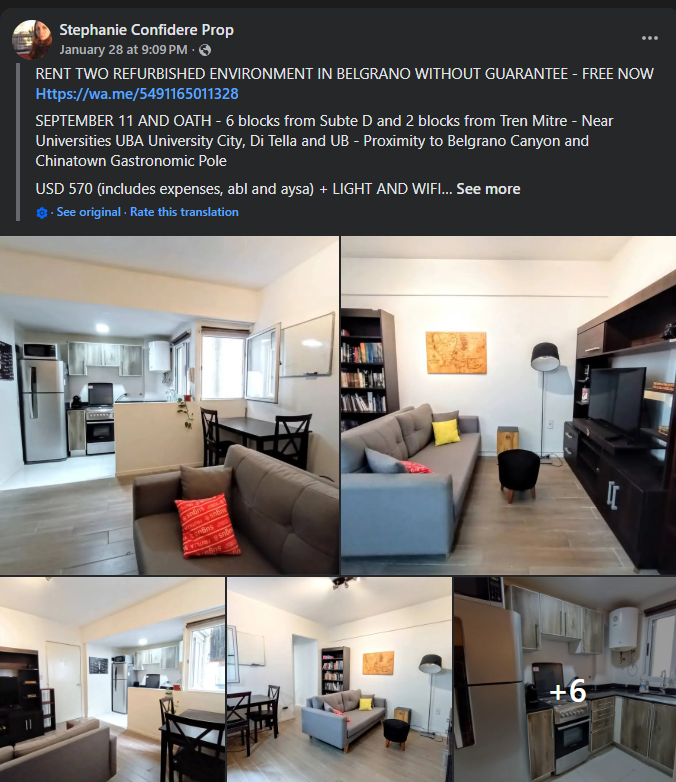
Rents: I found this furnished 1 Bedroom apartment on this Facebook group, advertised for rent today for 570 USD per month in a nice neighborhood. If you rent for a shorter period on Airbnb, it would be much more expensive. You can search for other apartments in this Facebook group.
If you rent a larger apartment long-term, the rent would be higher, starting around $1000 USD per month or more, depending on the area and size.
Here is the process we use to find great apartments. So, we will show you a table of all expenses in a moment. We will use $570 USD per month for our lower rent estimate and $925 per month for the middle cost of living estimate for expats who want a little more space.
Utilities: We estimate the year-round average for utilities for the smaller apartment above would be about $135.00 USD per month. The utilities would cost more for the larger space, starting at around $180 USD per month.
Groceries: We estimate about $400 per month for groceries for the two of us. Other expats are likely to purchase more imported foods from their home country, spending more than $575 per month on groceries.
Restaurants: We would eat out twice per week in local-style restaurants and buffets, ranging from about $6 to $12.00 USD per meal per person, and one or two splurges per month of $14 to $30 USD per meal per person. If you add it all up, we would spend around $240 per month on restaurants for the two of us. We may have a beer here and there, but that is covered below in alcohol.
Other expats are likely to eat more often at expensive restaurants and less in local-style restaurants, so they would likely spend more like $450 per month for 2 people in restaurants. It is lifestyle-dependent.
Cell Phone Data: The cost to get a prepaid SIM card for your unlocked smartphone is about $6 USD per month. Buy a Moviestar Sim card at any local market and activate it using this webpage.
Other expat couples are likely to buy two prepaid SIM cards so they would spend $12 USD per month.
Laundry: Apartments in Buenos Aires often have washing machines, and the laundry detergent is included in our groceries bill.
Drinking Water: We drank from the tap water while in Buenos Aires. We were hesitant at first, but the owner of our Airbnb said she does, and we confirmed that the water was good online in the Palermo area. We heard that some rural areas buy filtered drinking water
Internet: 60 Mbps in-home wifi is about $32 USD per month.
Transportation: We loved the Palermo and Belgrano areas of Buenos Aires. All of our daily needs, including groceries, shopping, restaurants, coffee shops, and nightlife, would be within 20 minutes walk.
We may take an Uber home at night or to the grocery store twice a week, averaging about $4 per ride or $32 per month. We would also ride public transportation (buses and subway) a few times per month to enjoy other parts of the city at about $1 USD each way per person. So we would spend about $44 per month on transportation.
Other retirees may want to pay cash for a used car, but would still need to pay another $320 per month or more for gasoline, repairs, and insurance.
Alcohol (Optional): A six-pack of domestic beers in the Tall Boy USA size is about $7 USD. In bars and restaurants, domestic beers are around $4 to $6 USD. So, we estimate about $150 per month on alcohol for the two of us.
Many other expats would spend more on imported foreign or craft beers in convenience stores, bars, and restaurants, so we estimate about $375 USD per month for 2 people, assuming they do not drink imported whiskey or wine.
If you decide to retire in Buenos Aires, we would recommend switching to local Malbec wine, which costs about $3 to $8 USD per bottle of 750 ML.
Entertainment (Optional): We would budget about $200 per month for entertainment for the two of us. We generally enjoy doing more do-it-yourself kinds of entertainment, so other expats would spend a little more, maybe $300 per month, for 2 of them?
Estimated Costs to Retire in Buenos Aires, Argentina
| Buenos Aires
Argentina |
Lower
(USD) |
Middle
(USD) |
| Rent | 570 | 1000 |
| Utilities | 135 | 180 |
| Groceries | 400 | 575 |
| Restaurants | 240 | 450 |
| Cell Data | 6 | 12 |
| Laundry | 0 | 0 |
| Drinking Water | 0 | 0 |
| Internet | 32 | 32 |
| Transportation | 44 | 320 |
| Total | $1427 | $2569 |
| Alcohol | 150 | 375 |
| Optional Total | $1577 | $2944 |
| Entertainment | 200 | 300 |
| Optional Total | $1777 | $3244 |
We gathered this data with our feet on the ground here in December of 2025, so adjust for inflation after that. The above lower cost of living estimate would apply if the two of us lived in Buenos Aires on a tight budget. The middle estimate is just an example of what more typical expats might spend if they moved here.
So, what would it cost you to live in Buenos Aires, Argentina?
To understand what it would cost you to live here, you must put your feet on the ground, see how you would choose to live, eat, and entertain yourself, and add it all up. It doesn’t matter what anyone else spends because we are all different.
You should also add anything to the above table that you spend money on in your home country that is not listed in the above table. Presumably, you find those things necessary in life. To do that, visit the Numbeo Buenos Aires and add anything not mentioned in the above table. Anything not on Numbeo you should add during your exploratory visit before moving to Buenos Aires.
Never move anywhere until you have visited first personally to verify the living costs for your lifestyle and needs. I am not guaranteeing these prices. These are just my notes and estimates from the time of my visit and this post. Your costs will likely be drastically different depending on your lifestyle and the time since this post was published.
Typical expats’ living costs in Buenos Aires, Argentina, range from about $1800 to $4800 per month. But people spending that much often have higher savings, incomes, or pensions. They often report spending more on accommodations, entertainment, eating out more, traveling, and alcohol. Many also have more expensive cars, houses, or apartments.
Buenos Aires, Argentina, Livability Factors
Before you move anywhere outside your home country, make a list of the factors you must have for a happy retirement. Here are my livability factors, and I will rank each as high, medium, or low before assigning an overall retirement desirability score to Buenos Aires.
Walkability: High. We could walk everywhere in our favorite neighborhood in Buenos Aires called Palermo. Everything was so centralized that we rarely needed to walk more than 20 minutes to get where we needed to go for everyday purposes. Plus, walking is the healthiest way to stay in shape as we age.
We jumped on a bus to see other parts of town from time to time. We also rode Uber taxis from time to time when we were in a hurry.
Internet: High. The in-home wifi in our apartment was 60 Mbps up and down. Good enough for us to do Zoom calls, upload YouTube videos, and watch Netflix. We were also able to use our cell phones as hotspots when we were out of the house together.
Food: Medium. Buenos Aires has some amazing international restaurants, but they seem kind of expensive for everyday life. So we would either cook at home more or eat at one of the buffet restaurants that offer more reasonable prices. In Argentina, we missed spicy dishes like Mexican, Asian, and other spicy International favorites. So we would rate the food as medium. But if you are a steak lover, this will be rated High for you, but it will be expensive.
Weather: High. Argentina is below the equator, so summer starts in December. Summer daytime highs in Buenos Aires average from 84 °F (29 °C) in January down to 59 °F (15 °C) in July. Nightly summer lows average from 70 °F (21 °C) in January down to 47 °F (8 °C) in July. The rainy season is December through March, with January receiving the most rain of 5.7 inches (137 mm).
Things to Do: High. Buenos Aires is an energetic European-feeling culture with abundant theatres, museums, symphony, and opera, along with a passionate football culture. There is a bustling nightlife along with excellent culinary experiences (especially steak), which can be as much as 50% cheaper than New York, London, or Paris. The architecture is fantastic, and there are great markets and things happening around the city almost daily. Walking around many neighborhoods feels like a living museum. It is not really a destination for beach lovers, but Brazil’s beaches are just a few hours north. Buenos Aires sits on a beautiful sailing bay, and you can take the ferry across to Uruguay in about 1 hour.
Social Considerations: Medium. English is not widely spoken in Argentina, but there are slightly more English speakers in Buenos Aires than in smaller towns. You will find some English speakers in tourist-facing businesses, but you can’t depend on it. So, if you intend on retiring here, you should learn some Spanish for a fuller life. I have met many expats overseas who have used Duolingo, the free language-learning smartphone app, to learn various languages. If you are just visiting, become familiar with Google Translate on your smartphone before you arrive.
Safety: High. Buenos Aires felt safe to us, and that is confirmed statistically. But, like any large city in the world, you need to remain aware of your surroundings and avoid getting isolated, especially at night.
Use Uber taxi to get home at night, and nothing valuable should be in an unsecured pocket or backpack. Don’t leave valuables out in the open. Also, the US State Department issues travel advisories for each part of the world, which you should be aware of. Argentina is “Level 1: Exercise Normal Precautions.” Here are my thoughts on how to remain safe all over the world.
Expat Community: High. Here are some Expat Facebook pages 1, 2, 3, and 4 that cater to English-speaking expats living in Buenos Aires. These online expat communities are great for learning what expats want to know when they first move overseas. You will often find that someone has recently answered your questions, so first search for already answered questions before asking in these groups.
Medical: High. This healthcare international comparison index ranks Argentina 60th in the world, 9 places ahead of the United States, which ranks 69th. There are different ways healthcare is rated, but this one seems to be considering not only the quality of care but also what patients are charged.
Several online sources confirm that Argentina’s public healthcare system is free for all nationalities, but there can be significant wait times for non-emergencies, and some hospitals have begun charging for services.
Private hospitals are not free but are much cheaper than what you would pay in countries like the United States, and may require you to pay before service is rendered.
Tourist Visa: High. Argentina does not require a tourist visa for short stays of up to 90 days for many Western or powerful passport countries. But sometimes people are asked for proof of onward flight and accommodations. They did not ask Qiang or me for either when we entered Argentina. They just asked how long we would stay.
Other countries should check with their embassies in their home countries to verify entry conditions.
Retirement Visa: You must demonstrate a $1400 to $2000 USD per month pension or passive income (depending on conversion rate), along with other documents, to obtain a temporary residence, and can become a permanent resident or citizen after a few years.
You can probably do this yourself, but if you want a lawyer, I would request a referral on one of the Expat Facebook pages I shared above. I would ask the expats for the immigration lawyer they used personally to obtain their retirement visa.
Real Estate: Foreigners can own land in Argentina, although there are some limitations.
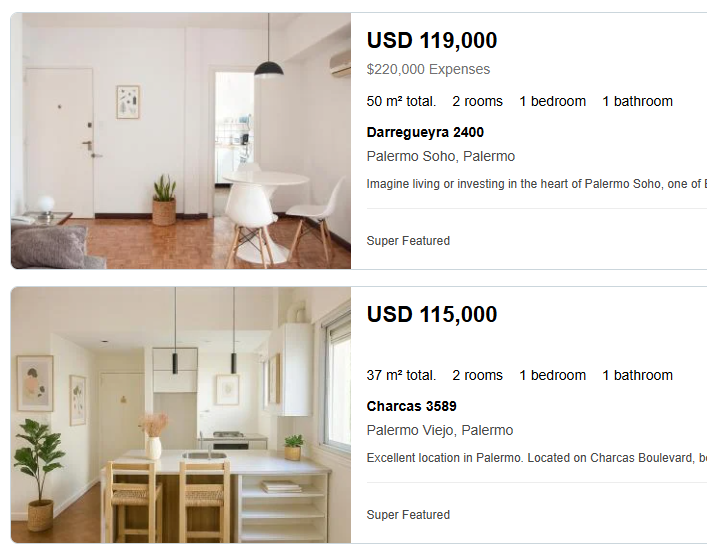
Great Neighborhood for under $120k USD: I found these two apartments for sale online today. It will likely be gone when you read this, but use this webpage and search in Buenos Aires in the Palermo area if you are interested.
I would not buy real estate in a foreign country until I have lived there for an extended period of time, making sure I love it after the honeymoon period. I have a report explaining what to look out for and why.
Buenos Aires, Argentina Overall Retirement Desirability Score: Medium. I would say medium or low for people retiring on a tight budget. But I would say high if you have deeper pockets and love living in a place with all of the amenities of such a worldly city.
Nighlife
Walk through this neighborhood starting around 8 PM to get a sense of the nightlife in Buenos Aires. The stops on this map are not necessarily suggested bars. This is just my way of getting you through a fun neighborhood until you hear and see the nightlife scene that floats your boat.
When you head home late, grab an Uber taxi if your walk home is through an isolated area. I would suggest that in any major city in the world, unless you are in a group of people.
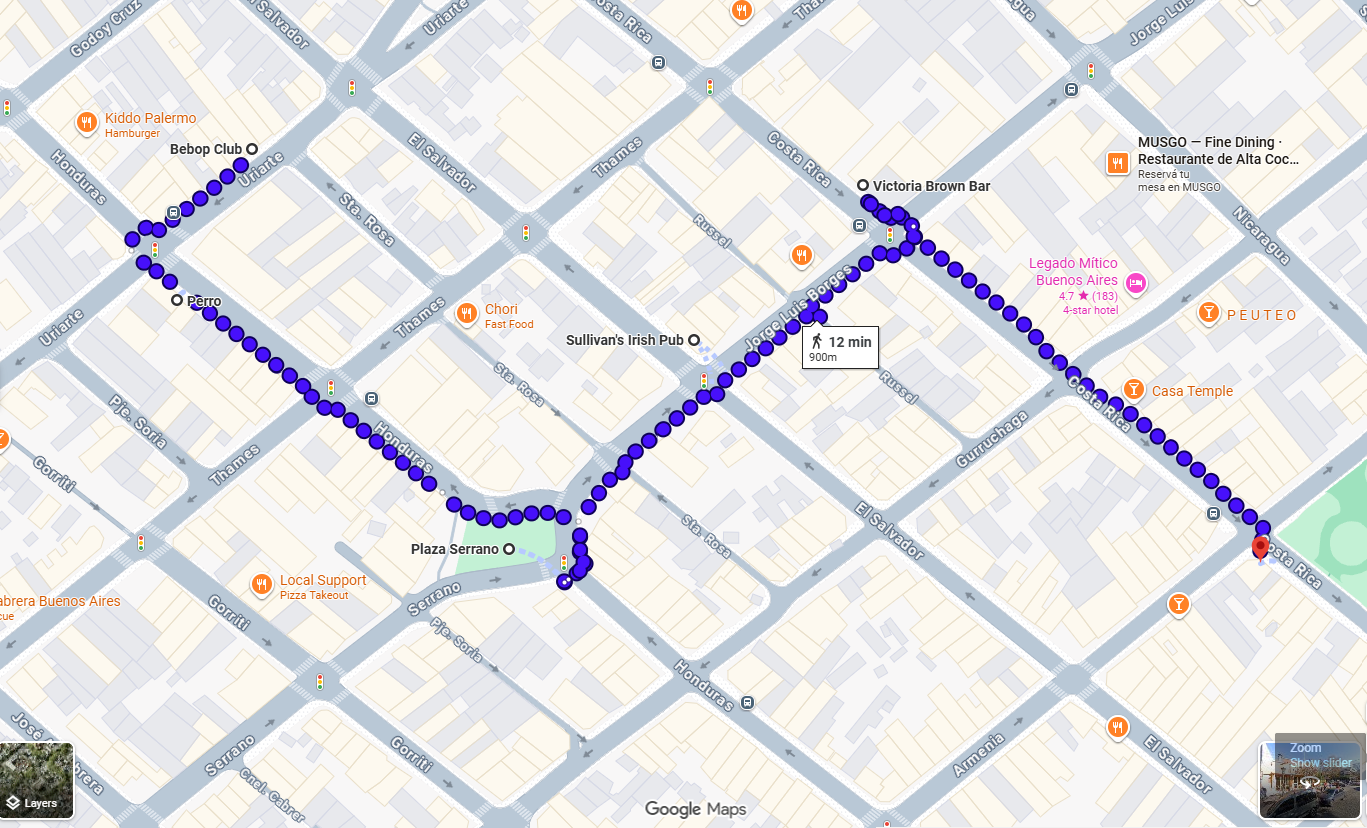
Favorite Neighborhood
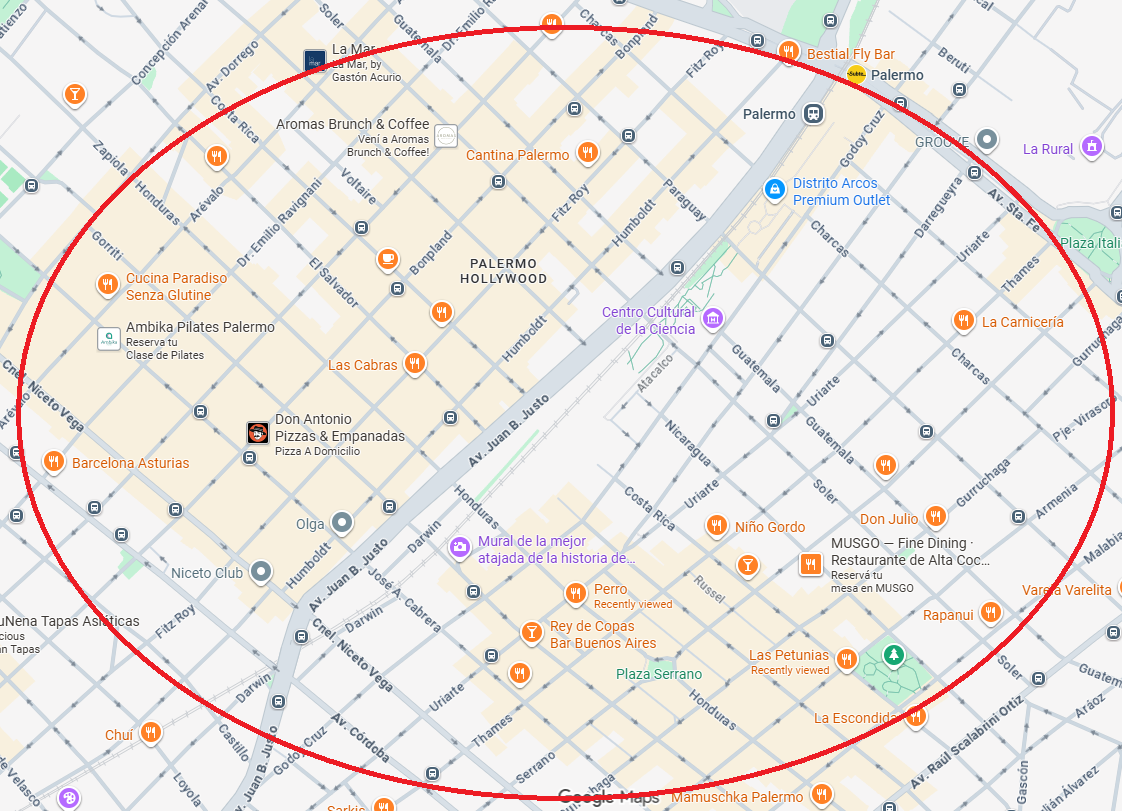
If I were picking where to live (or stay), I would walk this neighborhood (Palermo Hollywood and Palermo Soho) over several weeks to find the perfect spot where I was near shopping, coffee shops, grocery stores, and a casual nightlife. It seems to have the right mix of walkable life that is relatively affordable and close enough to public transportation to get to other parts of the city when the mood strikes. Another great neighborhood is around Rustica Restaurant, listed below.
Where we stayed in Buenos Aires
We were really happy with the Airbnb where we stayed.
How we got to Buenos Aires, Argentina
We took an Uber from our Airbnb apartment in Florianópolis to the Florianópolis International Airport and flew to EZE International Airport in Buenos Aires for $189 per person, including a luggage upgrade. We then took an Uber Taxi to our Airbnb apartment in the Palermo Neighborhood of Buenos Aires.
Restaurants, Services, Markets
Restaurants ($1 USD is 1400 Argentine Pesos (ARS)): Many of these restaurants gave us a 10% discount for cash off the below-listed price.
- Frevor: Best steak ribeye 38500 & pasta 27500, wine 7k/glass, anchoa fish 27500.
- Las Cabras: Flank steak 33k, Quessadilas(V) 25k, Lopez wine 11k – Good steak
- La Dorita: Ribeye 39500, Ravioli Spinach 23500, Empanada beef 3900, milanesa napo 29900, wine 6k/glass,
- NACHA Tex-Mex (Palermo): Beef burrito bowl 20k, veggie bowl 20k
- Pastasole Argentina: Fetuccini alfredo 12500
- Vive Café: Cappuccino 4900, croissant 3800
- Alchemy: Carrot cake 10300, Banana chocolate cake 5900
- Muralla: Fast food buffet by weight 19000/kg
- Virtudes de la Tierra: Vegetarian takeaway – 16000/kg
- Gianni’s Cucina & Social Club: Fusilli 20k, Fish la florentina 26300, Wine 22k
- Dandy Santa Fe: Pizza Marg 17k, Bondiola Horneada 32900, American burger 24600, Milanesa 28800
- Peggy’s Café: Ice Latte 5200, Carrot cake 9500
- CAMPOBRAVO: Riyeye 350g 26800, Raviolon Ricota 24500, Wine 25k/bottle
- Burger King: Burger only Whopper/veg 7500
- Beba Cocina: Mercado – Spanish omelette 15k, Veg croqueta 15k
- Kiddo Palermo: Veggie burger 8500, Beef 10500, fries 4000
Services/Markets/Interesting things to see:
- Jumbo: Supermarket
- Coto Hypermarket: Supermarket
- Supermercados DIA: Supermarket
- The Gourmet House: Wine store
- Wei Yuwen – Cheap Supermarket
- Senor Tango: Tango show only $45 or 65000ARS – book by whatsapp save $15, pay by cash on the show date
- Valentins Barbershop: 18000 haircuts
- ICARO Librería: Printing document store
- Ferry from BA to Colonial Uruguay: 1 hour to Colonial, $45 USD per person
- City bus/subway: 636 per ride
- Western Union: If you want cash, send it to yourself in Argentina. You can get cash more easily than using a debit card, and the exchange rate might be better. My bidet card was only allowing $130 USD per ATM visit. Western Union allowed about $300 USD.