In this video, I share the cost to retire in Montevideo, Uruguay. This was my first time in Uruguay, making it my 74th country. The beautiful woman in the photos with me is Qiang from Hobo Ventures YouTube Channel. Qiang’s channel shares our daily life.
After 30 days in Buenos Aires, Argentina, we took a 1-hour ferry to Uruguay for $45 USD each. The ferry landed in a town called Colonia del Sacramento. It is a small town affectionately called Colonia.
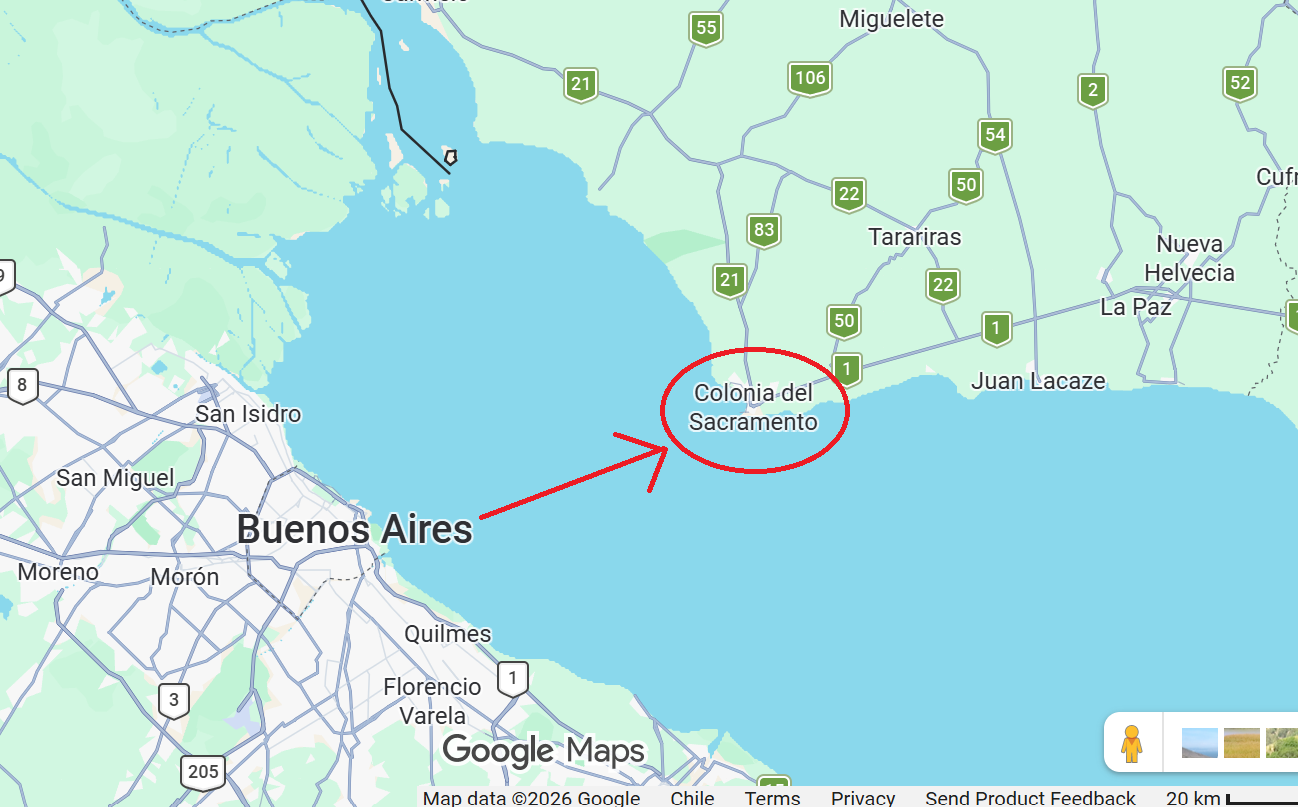
Colonia was visited by the Spanish in 1527, but later the Portuguese created a settlement here in 1680 and built a fort. But the Portuguese, Spanish, and even Brazilians fought over Colonia for a few hundred years until it became permanently part of Uruguay in 1828.
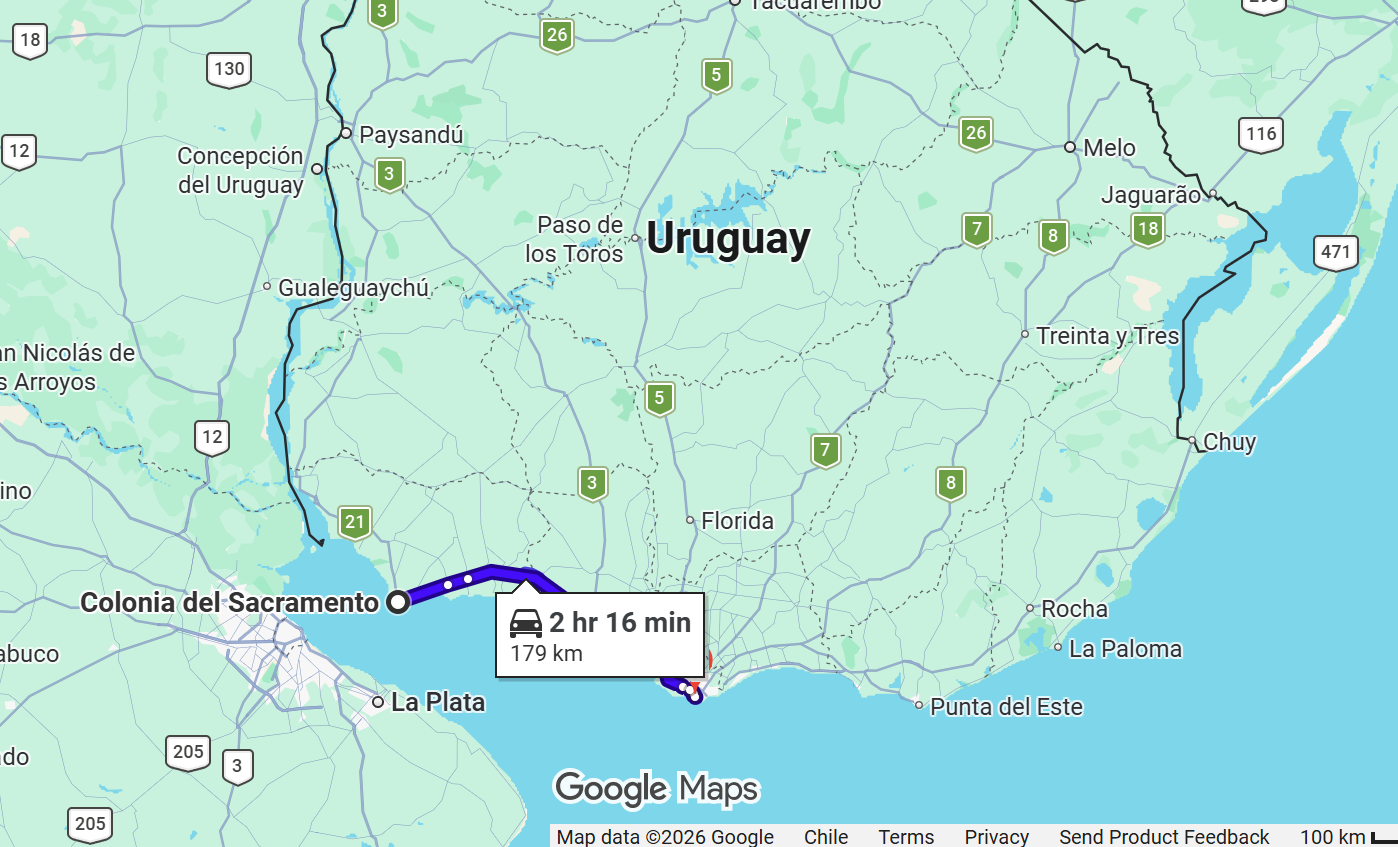
After a long weekend in Colonia, we took a 2.5-hour bus to Montevideo, the capital of Uruguay, for $16 USD each. We gathered the following cost-of-living data while we explored Montevideo, the capital of Uruguay.
Montevideo proper has about 1.3 million people, with 2 million living in the metropolitan area and 3.5 million living in all of Uruguay. To put that in perspective, there are 4 times as many people living in the metropolitan area of Buenos Aires as there are in all of Uruguay.
Some Europeans refer to Uruguay as the Switzerland of South America because of political stability, high incomes, and strong social systems. The political pendulum doesn’t swing as far as other countries in the Americas.
Plus, Uruguay has maintained an orderly approach to public debt restructuring rather than an outright refusal to pay, which has maintained international trust.
Visit my country playlists on YouTube to learn about my favorite places to retire affordably overseas.
In a couple of minutes, I will give you a line-item list of the cost of living in Uruguay, but first, let me pique your interest by showing you life on the ground here. I will show you culture and excitement first, and then where most expats live their daily lives.
Old Town, Montevideo, Uruguay
Old Town is where young-at-heart people live in Montevideo. It has more nightlife, more ancient and colonial-era architecture, more international restaurants, more sidewalk cafes and happy hours, and a more diverse population.
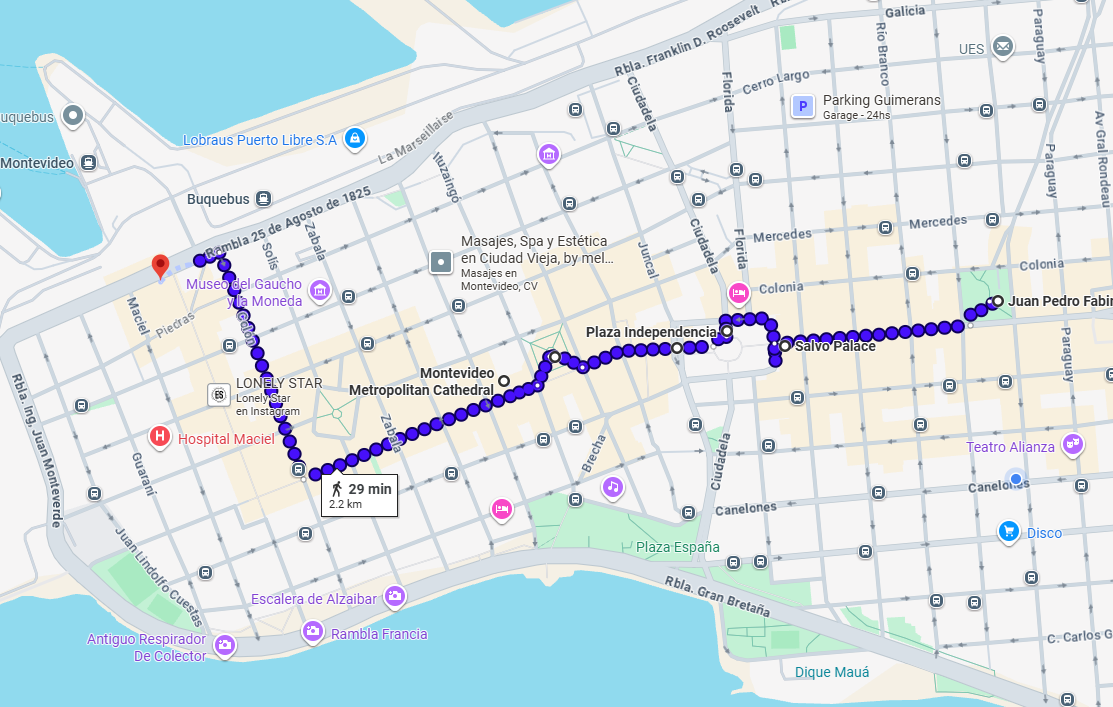
Juan Pedro Fabini Square is named after a politician famous for modernizing the city’s infrastructure. The fountain in the center, which includes gauchos, indigenous people, and horses, was created by José Belloni.
Salvo Palace, built by textile tycoons, was the tallest building in South America when it was created in 1928, as designed by Italian architect Mario Palanti.
Plaza Independencia marks the spot where the colonial-era old city meets the modern city. The statute in the center is of José Gervasio Artigas, the revered national hero and father of Uruguayan independence.
Gateway of the Citadel is the only remaining remnant of the castle walls that once defended the colonial-era old town of Montevideo, built by the Spanish in 1745.
Constitution Plaza is the oldest square and the political soul of the city since 1726, and now marks the spot where the constitution was signed for independent Uruguay in 1830.
Montevideo Metropolitan Cathedral is the main Roman Catholic Church in Uruguay and was inaugurated in 1804 on the grounds of the former church, with roots dating back to 1740.
Mercado del Puerto was originally a wholesale market for fruits, vegetables, and meat for ships and locals, but this modern version was built in England, shipped across the Atlantic, and assembled here in 1868. The market transformed into an array of restaurants and artisan shops in the 1970s.
Expat Living Area
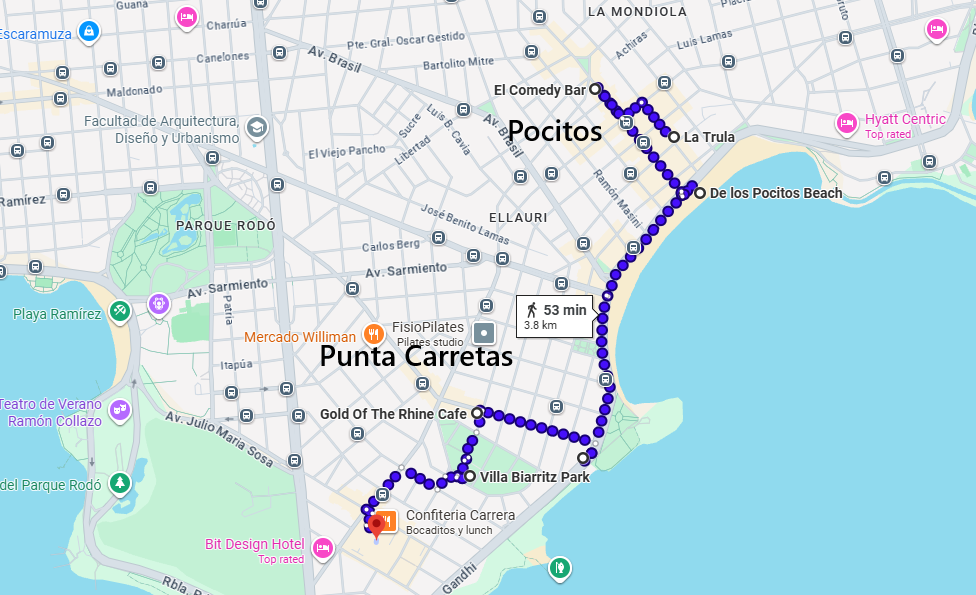
Expats in Montevideo, Uruguay, primarily reside in the coastal, upscale neighborhoods of Pocitos and Punta Carretas. Here, they find walkable neighborhoods with high-rise apartments, some with beach views. Walk this Google map for a full understanding.
Pocitos, Montevideo, Uruguay
Pocitos is where many expats of all ages decide to live. It has taller buildings with $100k to $200k USD condos, a sandy beach, and a few very expensive single-family homes.
It feels a little safer than Old Town, but there is not as much going on at night except some great restaurants with occasional live music.
Punta Carretas, Montevideo, Uruguay
Next door to Pocitos is another upscale neighborhood, Punta Carretas. It has more single-family homes, more tall condo buildings, and the beautiful Punta Carretas Shopping Mall.
Estimated Cost to Retire in Montevideo, Uruguay
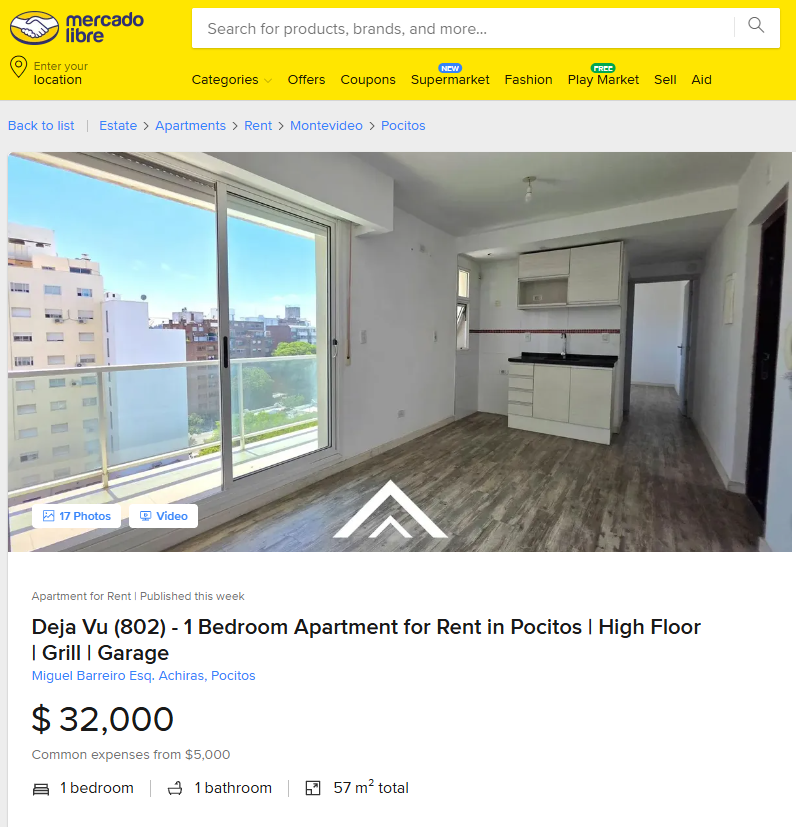
Rents: I found this 1 Bedroom apartment for rent in one of the most popular expat areas of Montevideo, only about 5 blocks to the beach. It is advertised for U32000 per month today ($834 USD) in a nice neighborhood. If you rent for a shorter period on Airbnb, it would be much more expensive. You can search for other apartments in this Facebook group.
If you rent a larger apartment long-term, the rent would be higher, starting around $1100 USD per month or more, depending on the area and size.
Here is the process we use to find great apartments. So, we will show you a table of all expenses in a moment. We will use $834 USD per month for our lower rent estimate and $1100 USD per month for the middle cost of living estimate for expats who want a little more space.
Utilities: We estimate the year-round average for utilities for the smaller apartment above would be about $120.00 USD per month. The utilities would cost more for the larger space, starting at around $150 USD per month.
Groceries: We estimate about $460 per month for groceries for the two of us. Other expats are likely to purchase more imported foods from their home country, spending more than $625 per month on groceries.
Restaurants: We would eat out twice per week in local-style restaurants and buffets, ranging from about $9 to $16.00 USD per meal per person, and one or two splurges per month of $15 to $30 USD per meal per person. If you add it all up, we would spend around $260 per month on restaurants for the two of us. We may have a beer here and there, but that is covered below in alcohol.
Other expats are likely to eat more often at expensive restaurants and less in local-style restaurants, so they would likely spend more like $475 per month for 2 people in restaurants. It is lifestyle-dependent.
Cell Phone Data: The cost to get a prepaid Antel SIM card for your unlocked smartphone is about $15 USD per month.
Other expat couples are likely to buy two prepaid SIM cards so they would spend $30 USD per month.
Laundry: Apartments in Montevideo often have washing machines and the laundry detergent is included in our groceries bill.
Drinking Water: We bought RO drinking water from the grocery store while in Montevideo. But if we retired here, we would buy a 5-stage RO system for the countertop for about 450 USD. The replacement filters are around $100 per, so we estimate about $9 month after purchase.
Internet: 60 Mbps in-home wifi is about $32 USD per month.
Transportation: All of our daily needs, including groceries, shopping, restaurants, coffee shops, and nightlife, would be within 20 minutes walk.
We may take an Uber home at night or to the grocery store twice a week, averaging about $4 per ride or $32 per month. We would also ride public transportation (buses and subway) a few times per month to enjoy other parts of the city at about $1.30 USD each way per person. So we would spend about $53.00 per month in transportation.
Other retirees may want to pay cash for a used car, but would still need to pay another $400 per month or more for gasoline, repairs, and insurance.
Alcohol (Optional): Tall boy (473ml) domestic beers are about $1.30 USD in grocery stores. In bars and restaurants, domestic beers are around $4 to $6 USD. So, we estimate about $150 per month on alcohol for the two of us.
Many other expats would spend a higher amount for imported foreign or craft beers in convenience stores, bars, and restaurants, so we estimate about $375 USD per month for 2 people, assuming they do not drink imported whiskey or wine.
Entertainment (Optional): We would budget about $200 per month for entertainment for the two of us. We generally enjoy doing more do-it-yourself kinds of entertainment, so other expats would spend a little more, maybe $300 per month, for 2 of them.
Estimated Costs to Retire in Montevideo, Uruguay
After discussing the cost of living here, I will share visa and residence, real estate, walkability, healthcare, and safety information. The first link in the comments below this video has details about all of that, the cost of living, and links to everything.
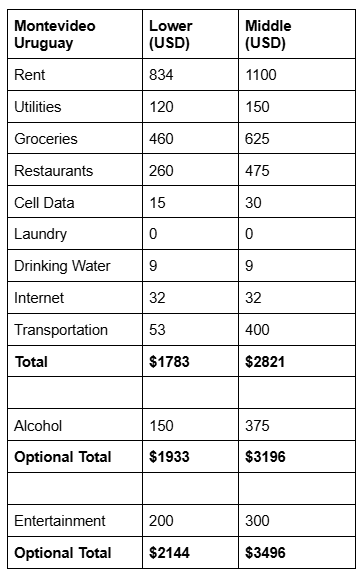
We gathered this data with our feet on the ground here in January of 2026, so adjust for inflation after that. The above lower cost of living estimate would apply if the two of us lived in Montevideo on a tight budget. The middle estimate is just an example of what more typical expats might spend if they moved here.
So, what would it cost you to live in Montevideo, Uruguay?
To understand what it would cost you to live here, you must put your feet on the ground, see how you would choose to live, eat, and entertain yourself, and add it all up. It doesn’t matter what anyone else spends because we are all different.
You should also add anything to the above table that you spend money on in your home country that is not listed in the above table. Presumably, you find those things necessary in life. To do that, visit the Numbeo Montevideo and add anything not mentioned in the above table. Anything not on Numbeo you should add during your exploratory visit before moving to Montevideo.
Never move anywhere until you have visited first personally to verify the living costs for your lifestyle and needs. I am not guaranteeing these prices. These are just my notes and estimates from the time of my visit and this post. Your costs will likely be drastically different depending on your lifestyle and the time since this post.
Typical expats’ living costs in Buenos Aires, Argentina, range from about $2000 to $6000 per month. But people spending that much often have higher savings, incomes, or pensions. They often report spending more on accommodations, entertainment, eating out more, traveling, and alcohol. Many also have more expensive cars, houses, or apartments.
Montevideo, Uruguay, Livability Factors
Before you move anywhere outside your home country, make a list of the factors you must have for a happy retirement. Here are my livability factors, and I will rank each as high, medium, or low before assigning an overall retirement desirability score to Buenos Aires.
Walkability: High. We stayed in the Central area of Montevideo. Most expats stay in more expensive areas like Pocitos. But both areas are very walkable. Everything was so centralized that we rarely needed to walk more than 20 minutes to get where we needed to go for everyday purposes. Plus, walking is the healthiest way to stay in shape as we age.
We jumped on a bus to see other parts of town from time to time. We also rode Uber taxis from time to time when we were in a hurry.
Internet: High. The in-home wifi in our apartment was 60 Mbps up and down. Good enough for us to do Zoom calls, upload YouTube videos, and watch Netflix. We were also able to use our cell phones as hotspots when we were out of the house together.
Food: Medium. Uruguay has some international restaurants, but those seemed expensive to us for everyday life. So we would cook at home more and only eat out a couple of times per week. In Uruguay, we missed spicy dishes like Mexican, Asian, and other spicy International favorites. So we would rate the food as medium. But if you enjoy more moderately spiced local foods, this might be rated High for you, but it will be expensive, as shown in my restaurant expenses.
Weather: High. Uruguay is below the equator, so summer starts in December. Summer daytime highs in Montevideo average from 83 °F (28 °C) in January down to 59 °F (15 °C) in winter average highs in July. Nightly summer lows average from 67 °F (18 °C) in January down to 45 °F (7 °C) winter nightly lows in July. The rainy season is December through April, with April receiving the most rain of 4.4 inches (112 mm).
Things to Do: Medium. Montevideo is a beautiful, relatively clean city, but it is a little sleepy at night compared to other Latin American cities. You will find a few live music venues, jazz here and there, and some dancing at night, including tango and top 40 music. You will also find a fine arts scene, featuring symphony, live theatre, and some opera. But it is not one of those cities that feels like there is something going on every night or endless things to do. People who can afford it spend many evenings in restaurants chatting it up with friends. If they have lighter budgets, you are more likely to find them at happy hours, cafes, or in the parks, or walking along the ocean. To the extent there is entertainment at night, it is often in the old town area or thereabouts, rather than in more exclusive expat areas.
Social Considerations: Medium. English is not widely spoken in Uruguay. You will find some English speakers in tourist-facing businesses, taxis, and an Uber driver here and there. When someone does speak English, they are often very happy to speak it with you, because it is a bit of a treat for them. But even locals who can’t speak English often know what you are asking for if you use simple words and speak slowly. If you intend to retire here, you should learn some Spanish for a fuller life. I have met many expats overseas who have used Duolingo, the free language smartphone application, to learn many different languages. If you are just visiting, become familiar with Google Translate on your smartphone before you arrive.
Safety: High. The expat hot spots like Pocitos felt pretty safe to us, but you should remain aware of your surroundings and avoid getting isolated at night. In the old town area, there is slightly more crime at night.
Use Uber taxi to get home at night, and nothing valuable should be in an unsecured pocket or backpack. Don’t leave valuables out in the open. Also, the US State Department issues travel advisories for each part of the world, which you should be aware of. Read that from time to time to stay up to date. Uruguay, at the time of this writing, is “Level 2: Exercise Increased Caution.” Here are my thoughts on how to remain safe all over the world.
Expat Community: Medium. Here are some Expat Facebook pages 1, 2, and 3, that cater to English-speaking expats living in Uruguay. These online expat communities are great for learning what expats want to know when they first move overseas. You will often find that someone has recently answered your questions, so first search for already answered questions before asking in these groups.
Medical: High. This healthcare international comparison index ranks Uruguay 35th in the world, 34 places ahead of the United States, which ranks 69th. There are different ways healthcare is rated, but this one seems to be considering not only the quality of care but also what patients are charged.
Tourist Visa: High. Citizens from over 80 countries, including the US, UK, Canada, and the EU, do not need a visa for tourist visits of up to 90 days. Visitors must have a valid passport, proof of onward travel, and, if required, proof of funds. Although, they only asked Qiang and I how long we would stay and did not ask for onward flights or proof of funds.
Other countries should check the embassy in their home country to verify entry conditions.
Retirement Visa: Uruguay offers a retirement residency program for individuals with a foreign pension or passive income of 1,500 per month. Permanent residency is also offered and can lead to citizenship after about five years.
You can probably do this yourself, but if you want a lawyer, I would request a referral to a lawyer on one of the Expat Facebook pages I shared above. I would ask the expats for an immigration lawyer whom they used personally to get their residency or citizenship.
Real Estate: Foreigners can own land in Uruguay with most of the same rights as Uruguayan citizens. But, if you are buying large quantities of rural land, you may need advance permission. You can even buy real estate remotely in Uruguay.
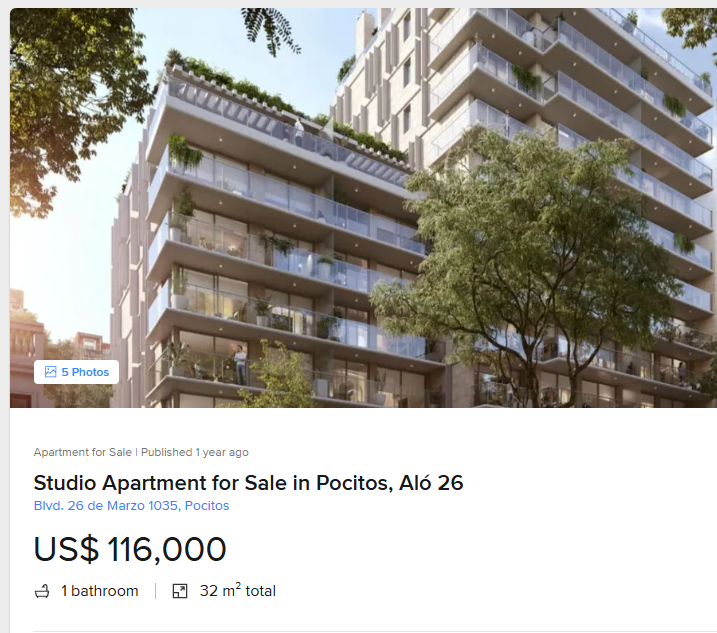
Great Neighborhood for $116k USD: I found this apartment for sale online today. It will likely be gone when you read this, but use this webpage to find what else is available that may fit your needs better.
I would not buy real estate in a foreign country until I have lived there for an extended period of time, making sure I love it after the honeymoon period. I have a report explaining what to look out for and why.
Montevideo, Uruguay Overall Retirement Desirability Score: Medium. I would say medium or low for people retiring on a tight budget. But it could be high if you are focused on Latin America, have a little more flexibility in your budget, prefer political stability, lower taxes, and a strong social system.
For more details on the cost of living, where we stayed, our restaurants, or walking tours, and our retirement desirability factors, click the first link in the description below the video.
Where we stayed in Montevideo
We were happy with the Airbnb where we stayed. We stayed o the Central area near the old town Montevideo. But most expats prefer to stay in Pocitos or Punta Carretas.
Restaurants, Services, Markets
Montevideo
Restaurants ($1 USD is 39 Uruguay Pesos (UYU)):
- El Palacio del Café: Cappuccino 190, Submarino 225, carrot cake 295
- Burger King: Card 22% Off -Veggie burger 420, Combo Whopper beef 515
- Bar Ducon: Card 22% Off – Sunset view bar – Wine Marselan bottle 490, Pizza Azul 620, Olive 160
- Bosque Bambú (Vegetarian buffet): Card 22% Off -good food- 700 uyu = 1 kg
- La Trula: Chivito veggie 500, Calssico 500 – Uruguay must eat
- Montevideo al Sur Bar: Beer 1 litre 380
- Kona Poke&bar centro: Poke veggie 490, Poke chicken 490
- Restaurant AliBaba: Falafel wrap 350, carne wrap 380, hummus 150
Montevideo
Services/Markets/Resources
- Disco supermarket: Groceries
- Ta ta supermarket: Coffee starbuck 484
- Puesto de frutas y verduras El Rami: Fruit and vegetable store
- La Molienda: Nuts store
- Punta Carretas Shopping: Prison changed to a shopping mall (nice, everything)
- Barbería Los Ibañez: Good haircut -350
Colonial de Sacramento
Restaurants ($1 USD is 39 Uruguay Pesos (UYU)):
- Restaurante Pasaje las Flores: Beef with tannat wine sauce 820, salad 560
- NAPO Pizza Napoletana: Margherita pizza 430
- Irene’s Restaurante: Vege stew with rice 330, Seitan fried meat 470, Limonada big jug 280
- Colonia Sandwich Coffee Shop: Submarino 190, Cappucino 180, CArrot cake 200 , good coffee and cake
- Viejo Barrio: Big dish for share – Steam Fish 700, Raviolones capresse 620, house wine 500ml 250
- Serrano Café: Limonada 180, carrot cake 290
Colonial de Sacramento
Services/Markets/Resources
- TURIL TERMINAL COLONIA: Better bus and faster, 2.5 hours – 608 pesos per ticket
- Antel: Simcard 65, Data package 90GB for 3 months 290
- Supermercados Económico Gral Flores: Cheaper supermarket in town
- EL TANO FRUTAS y VERDURAS: Vegetables and fruits store
- Super USA: Supermarket
- Micro Macro Tigre 2: General Store