
Click here to watch the above video.
We are in Rio De Janeiro, Brazil. Today, I will answer the question: Is it still possible to retire on a tight budget here? I will share estimated costs for a retirement lifestyle with low to middle-range living expenses.
I left the United States 18 years ago. I travel the world, moving forward on one-way tickets while sharing the best places to retire affordably overseas. I was last in Brazil 16 years ago. I returned to get today’s cost-of-living numbers.
I will share the video Qiang and I took with our feet on the ground here.
Rio De Janeiro is the most beautiful large city I have seen in the 73 countries I have lived in since leaving the USA.
I will cover the eight factors retirees must consider when retiring overseas. I will start with the first two factors, safety and cost of living.
There is no such thing as 100% safety. It is always relative to your current situation. In 2024, Rio experienced about 27 murders per 100k population. Thirteen cities in the USA had higher murder rates than Rio.
The violence in those thirteen US cities is grouped mostly in areas controlled by gangs fighting over drug territory. People who stay out of those drug areas, feel pretty safe in those 13 US cities.
That same pattern holds for safer neighborhoods in Rio, such as Leblon and Ipanema. So I will use cost-of-living numbers in the areas where we feel safe in Rio. It costs more than many parts of Rio, but we feel safe there. I will share my Rio safety tips at the end of this video.
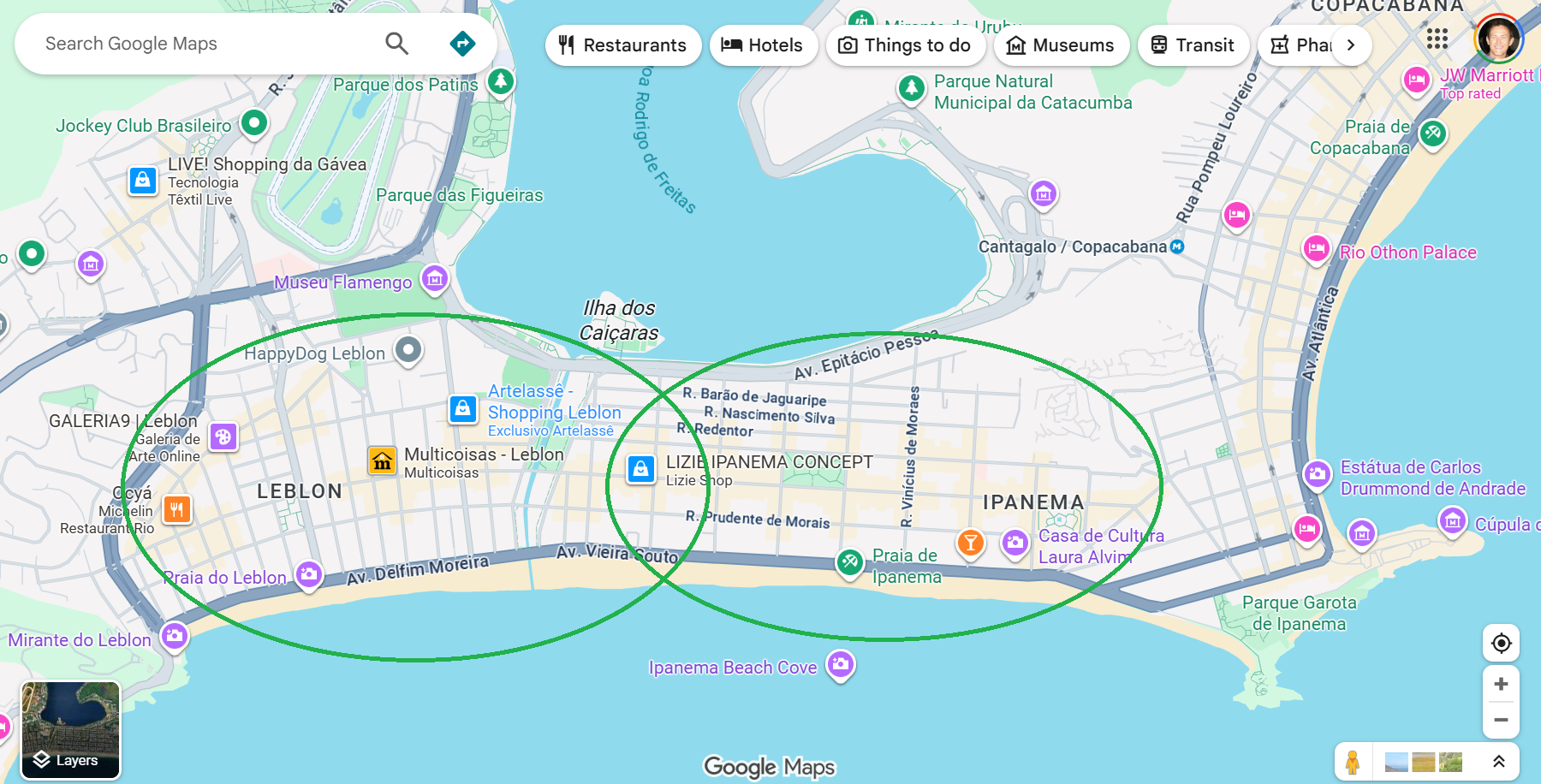 Google Map
Estimated Cost to Retire in Rio De Janeiro, Brazil
 Rents: I found an unfurnished 1-bedroom apartment advertised for rent today for R3785 ($706 USD) per month, with a long-term lease agreement in the city center. If you rent for a shorter period on Airbnb, it would be much more expensive.
If you rent a larger apartment long term, the rent would be higher, starting around $1012 USD per month on up depending upon area and size.
Here is the process we use to find great apartments. So, we will show you a table of all expenses in a moment. We will use $706 USD per month for our lower rent estimate and $1012 per month for the middle cost of living estimate for expats who want a little more space.
Utilities: We estimate that the year-round average for our utilities would be about $70 USD per month. The utilities would cost more for the larger space, starting at around $106 USD per month.
Groceries: We estimate about $340 per month for groceries. Other expats are likely to shop more often in expensive grocery stores, often spending more than $450 per month on groceries.
Restaurants: We would eat out twice per week in local-style restaurants for about $6.00 to $12.00 USD per meal per person, and one or two splurges per month of $12 to $20 USD per meal per person. If you add all that up, we would spend around $225 per month for the two of us in restaurants. We may have a beer here and there, but that is covered below in alcohol.
Other expats are likely to eat more often at expensive restaurants and less in local-style restaurants, so they would likely spend more like $380 per month for 2 people in restaurants. It is lifestyle-dependent.
Cell Phone Data: The cost to get a prepaid SIM card for your unlocked smartphone is about $10 USD per month.
Other expat couples are likely to buy two prepaid SIM cards so they would spend $20 USD per month.
Laundry: Unfurnished apartments in Rio De Janeiro generally have no washing machines. Drop off laundry in the area would charge us about $15 USD for 5 kg of laundry per week, or $60 USD per month.
Drinking Water: Ceramic drinking water filters in Brazil typically cost around $120 to purchase, and the filters require replacement every year at a cost of approximately $100. So we would spend about $12 per month on drinking water.
Internet: 50 MBPS in-home wifi is about $25 USD per month.
Transportation: Rio De Janeiro has a subway, which costs $1.50 each way. We estimate that the two of us will take one round-trip ride per week, which is $24 USD per month. We would also take Uber at home one way at night twice per week for $2 per ride, or another $16 per month, so $40 per month for the two of us. We walked everywhere because we were exploring where we would live if we were to move here. Many people also ride bikes here, so we would also consider purchasing bicycles. Other retirees may want to pay cash for a used car, but would still need to pay another $500 per month or more for gasoline, repairs, insurance, and off-street parking.
Alcohol (Optional): Domestic beer in Rio is $0.93 for a tall boy. In bars and restaurants, domestic tall boys are about $2.43 USD. So, we estimate about $100 per month on alcohol for the two of us.
Many other expats would spend a higher amount for imported foreign or craft beers in convenience stores, bars, and restaurants, so we estimate about $300 USD per month for 2 people, assuming they do not drink imported whiskey or wine.
Entertainment (Optional): We would budget about $200 per month for entertainment for the two of us. We generally enjoy doing more do-it-yourself kinds of entertainment so other expats would spend a little more, maybe $300 per month, for 2 of them?
Estimated Costs to Retire in Rio De Janeiro, Brazil
|
Rio De Janeiro Brazil |
Lower (USD) |
Middle (USD) |
|
Rent |
706 |
1012 |
|
Utilities |
70 |
106 |
|
Groceries |
340 |
450 |
|
Restaurants |
225 |
380 |
|
Cell Data |
10 |
20 |
|
Laundry |
60 |
60 |
|
Drinking Water |
12 |
12 |
|
Internet |
25 |
25 |
|
Transportation |
40 |
500 |
|
Total |
$1488 |
$2565 |
|
|
|
|
|
Alcohol |
100 |
300 |
|
Optional Total |
$1588 |
$2865 |
|
|
|
|
|
Entertainment |
200 |
300 |
|
Optional Total |
$1788 |
$3165 |
We gathered this data with our feet on the ground here in October of 2025, so adjust for inflation after that. The above lower estimated cost of living would be if the two of us lived in Rio De Janeiro on a tight budget. The middle estimate is just an example of what more typical expats might spend if they moved here.
So, what would it cost you to live in Rio De Janeiro, Brazil?
To understand what it would cost you to live here, you must put your feet on the ground, see how you would choose to live, eat, and entertain yourself, and add it all up. It doesn’t matter what anyone else spends because we are all different.
You should also add anything to the above table that you spend money on in your home country that is not listed in the above table. Presumably, you find those things necessary in life. To do that, visit the Numbeo Rio De Janeiro and add anything not mentioned in the above table. Anything not on Numbeo you should add during your exploratory visit before moving to Rio De Janeiro.
Never move anywhere until you have visited first personally to verify the living costs for your lifestyle and needs. I am not guaranteeing these prices. These are just my notes and estimates from the time of my visit and this post. Your costs will likely be drastically different depending on your lifestyle and the time since this post.
Typical expats’ living costs in Rio De Janeiro, Brazil, range from about $2000 to $5000 per month. But people spending that much often have higher savings, incomes, or pensions. They often report spending more on accommodations, entertainment, eating out more, traveling, and alcohol. Many also have more expensive cars, houses, or apartments.
Rio De Janeiro, Brazil, Livability Factors
Before you move anywhere outside your home country, make sure to create a list of things that you must have for your happy retirement. Here are my livability factors, and I will rank each as high, medium, or low before assigning an overall retirement desirability score.
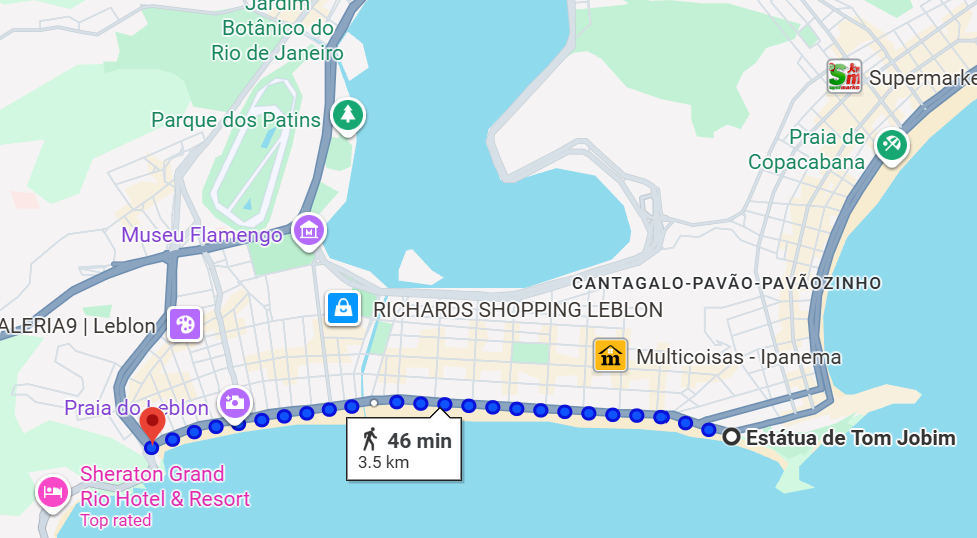
Walkability: High. We walked everywhere in Leblon and Ipanema. Everything was so centralized that we rarely needed to walk more than 30 minutes to get where we needed to go for everyday purposes. Plus, walking is the healthiest way to stay in shape as we age.
Internet: High. The in-home wifi in our apartment was 50 MBPS up and down. Good enough for us to do Zoom calls, upload YouTube videos, and watch Netflix. We were also able to use our cell phones as hotspots when we were out of the house together.
Food: High. There are restaurants from all over the world, so you will probably be able to find food from home, and several grocery stores have food from around the world. If we lived here, we would have a tendency to cook at home much of the time because we seem to have a much higher tolerance for spicy foods than we find in restaurants, and it would be easier to control our food budget by eating at home. But we would go out to eat 3 to 4 times per week because it is such great people watching in Rio.
Weather: High. Brazil is below the equator, so summer is in December. Summer daytime highs average from 88°F (31°C) in February down to daytime winter highs of 77°F (25°C) in July. Nightly summer lows average from 75°F (24°C) in January down to 68°F (20°C) for nightly winter lows in July. The rainy season is October through March, with December and January receiving the most rain.
Things to Do: High. Rio is one of the hottest tourist spots in Brazil. Being around people on holiday can be good because they are excited and want to try new things, party, have fun, and spend money. But it can be bad because it tends to force prices higher, and having people everywhere can get annoying. Our favorite thing to do in Rio is walking around, people watching in the beautiful tree-lined streets and beaches, while enjoying this charming city and its beautiful people. Rio has everything you would expect, such as swimming, scuba, beaches, boat tours, kayaking, stand-up boarding, live music, people watching, nightlife, professional soccer, cultural tours, coffee shops, tennis courts, shopping, opera, symphony, and golf.
Social Considerations: Medium. English is not widely spoken in Rio. You will find some English speakers in tourist-facing businesses, especially in Copa and Ipanema. But if you are unwilling to learn some basic Portuguese language, you will be spending a lot of time on Google Translate. So, if you intend on retiring here, you should learn some Portuguese for a fuller life. I have met many expats overseas who have used Duolingo, the free language smartphone application, to learn many different languages.
Safety: Medium. The Ipanema and Leblon areas of Rio are relatively safe. Nothing valuable should be in an unsecured pocket, front or back, and don’t leave valuables out in the open. Also, the US State Department issues travel advisories for each part of the world, which you should be aware of. Brazil is level 2 right now, “Exercise Increased Caution.” We often travel to level 2 locations, so this was not a big concern for us, but you should be aware of it nevertheless. Here are my thoughts on how to remain safe all over the world.
Expat Community: Medium. Here are a few Facebook page 1, 2, that cater explicitly to English-speaking expats living in Rio. These online expat communities are great for learning things that expats want to learn when they first move overseas. You will often find that someone has answered your questions recently, so first search for already answered questions.
Medical: High. This healthcare international comparison index ranks Brazil 83rd in the world, which is not quite as good as the United States, which ranks 69th in the World. There are different ways healthcare is rated, but this one seems to be considering not only the quality of care but also what patients are charged.
The good news is that Brazil’s public healthcare system is free for all citizens and visitors, as mandated by the country’s constitution. Several tourist videos report receiving free treatment in hospitals in Brazil.
Tourist Visa: High. Australia, Canada, and the United States are countries whose citizens are currently required to get a digital e-Visa for tourism and business travel to Brazil. Other countries should check the embassy in their home country to verify the conditions of entry, or at the bottom of this page.
Retirement Visa: You must demonstrate $2000 USD per month pension or equivalent and prove you are retired in your home country, provide a clean criminal record in your home country, and prove you have health insurance if the application is made from outside Brazil. Details.
You can probably do this yourself, but if you want a lawyer, I would request a referral to a lawyer on one of the Expat Facebook pages I shared above. I would ask the expats for an immigration lawyer whom they used personally to get their retirement visa.
Real Estate: Foreigners can own land in Brazil, although there are some limitations and significant complications even for Brazilians.
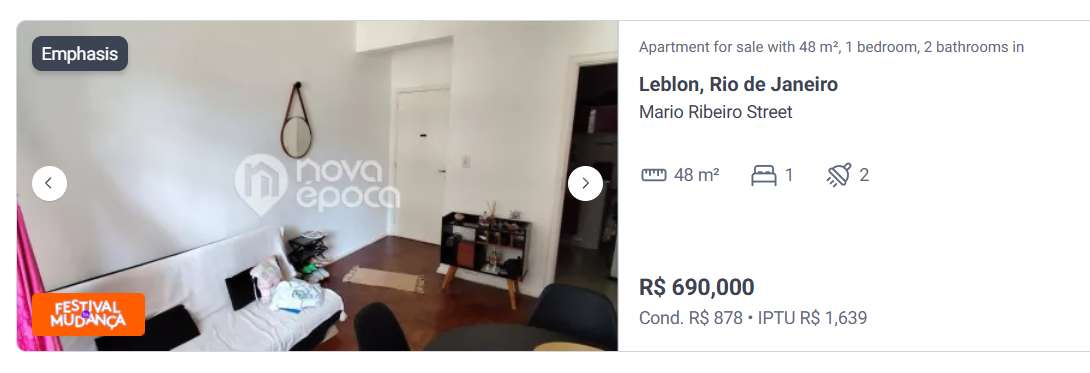

Fixer-Upper in Leblon $129k USD
I would not buy real estate in a foreign country until I have lived there for an extended period of time, making sure I love it after the honeymoon period. I have a report explaining what to look out for and why. I would also hire a lawyer who has no conflict of interest with me. Do not use a lawyer recommended by your real estate broker or your local lover. I would seek a referral from an expat who has used that lawyer’s services to successfully buy real estate in Rio.
l Overall Retirement Desirability Score: High. I love this part of Brazil. It is presently one of my favorite places in South America.
Leblon to Ipanema Beach Walking Tour
A lovely walk along the beach between Leblon and Ipanema

My Rio Safety Tips
We felt safe walking around the Ipanema and Leblon areas during the day and even into the early evening. From the early evening on, we would order an Uber taxi whenever we realized the direction we needed to walk was not full of other people.
The key to our sense of safety was avoiding isolation by using the Uber Taxi App once we realized the direction we needed to walk was starting to feel isolated. Additionally, be sure to read my thoughts on how to stay safe worldwide.
Where we stayed in Leblon (and Transfers)
We stayed at this apartment on Airbnb for about $70 USD/night plus Airbnb cleaning fees, because I wanted to be within walking distance of everything in Leblon and Ipanema. If we moved here and signed a long-term lease, I would expect to pay about one-third of that nightly rate, as I showed above under the cost of living rents.
How we got to Rio De Janeiro, Brazil
We flew with one-way tickets from Kuala Lumpur, Malaysia, to Rio de Janeiro on Qatar Airways for about $ 1,200 USD per person. We found the flight on Skyscanner.com but booked it directly with Qatar.
We had already booked a flight, departing Brazil for Argentina about six weeks later, but we were never asked for proof of that onward flight when checking into our flight or by immigration upon entry into Brazil. The taxi to our Airbnb accommodations was arranged through our above Airbnb host and cost $50.00 USD. They do have the Uber taxi application in Brazil, so make sure to download it and sign up before flying.
Our Day Trip to Central Rio
We took the subway from Antero de Quental Station in Leblon to the Uruguaiana Station in Centro Rio, and then walked to the following places for a day trip before heading home on the subway in the opposite direction. The subway costs $1.50 USD per person each way.
Kebab Shop: Falafel wrap R26.90, Chicken wrap R24.90
Mosteiro de São Bento: Gorgeous free monastery church
Real Gabinete Português de Leitura: Gorgeous free library of Brazilian Authors.
Restaurants, Services
Restaurants, Bars ($1 USD is R5.34 Brazilian real (R))
Delírio Tropical Ipanema: Buffet style – good food but a little expensive
Iná Leblon |Restaurante de Comida Brasileira: Feijoada Vegana R47 , Moqueca camarão R58
Pope Ipanema: Veg. Ravioli R78, Beef Tornedor R108,
Herr Pfeffer: Braham draft beer R10, Whisky Nacional big big shot R20, Linguica R35
Sou do Esporte – Leblon: Cappucino R14.9, Omettle R38.90, Mexidos omettle R24.9
Argumento: Cafe inside the bookstore
Café Cardin: Cafe with milk R15, Tapico egg R28, set meal R45 with drip coffee
Manah Restaurante e Café: Coffee with milk R12, Quiche R28
Kebab Shop: Falafel wrap R26.90, Chicken wrap R24.90
Buteco Novo Rio: Neighborhood bar, big beer R12
Pura Brasa Ipanema: Happening restaurant in Ipanema, draft beer R11.90
Services/Markets:
Zona Sul Supermercado Leblon: Supermarket with international imports, food buffet, and eat-in tables. Breakfast weight R76.9/kg, great breakfast and wine choices
Pão de Açucar Supermarket: More local-feeling supermarket, plus the ATM we used.
Havaianas: Qiang got new flip flops here
Feira Hippie de Ipanema: Sunday hippie market, food carts, arts, jewelry