In this report, I share 5 Better Neighborhoods to Retire in Southeast Asia in 2026.
After putting my feet on the ground for 19 years and 62 cities in Thailand, Vietnam, Cambodia, Laos, Indonesia, Malaysia, Myanmar, Brunei, Singapore, and the Philippines, I will share my 5 favorite neighborhoods in all of Southeast Asia.
In each of my 5 favorite neighborhoods, here is what I look for when I am picking my favorite neighborhoods.
Walkability: The neighborhood has to be walkable to restaurants, coffee shops, and public markets for fresh fruits, vegetables, and proteins. And the neighborhood’s not deserted at night. There are places to go have a beer or hear some live music, activities, events, a sports bar, or a night market for people watching. I don’t want to have to get in a car and drive for everything.
Safety: I want to feel safe when I walk out of my house in the evening. I want to be able to people watch and enjoy the place I’m living. I will remain aware of my surroundings, but I don’t want to be looking over my shoulder all the time to see who is coming for me.
Restaurants: There has to be reasonably priced local food and some international choices or expat restaurants in case I’m missing food from home.
Weather: I can’t live anywhere where it gets colder than about 60°F at night. My daily uniform is flip-flops, T-shirts, and shorts.
Population: I prefer to live in a neighborhood where the majority of the population is local people. Once the expat population is more than 20% or 30%, a neighborhood begins to become less interesting to me. Neighborhoods with high expat concentrations are great for new people who are first retiring overseas. But once they have their foreign legs under them, many prefer being primarily surrounded by local culture.
Okay, now that you know my ground rules, here are my five favorite neighborhoods in all of Southeast Asia. I will save my very favorite two neighborhoods for last.
5 Best Neighborhoods to Retire in Southeast Asia in 2026
Boracay (5th Favorite Neighborhood): Boracay is probably the most famous island in the Philippines. You’re talking white sand beaches, turquoise water, gorgeous coral reefs. Great nightlife and 50 excellent international restaurants. Boracay is a place where the world comes to play.
So it can be crazy crowded, so I would stay away from most of Boracay and just stay in these red areas that I am showing you. 
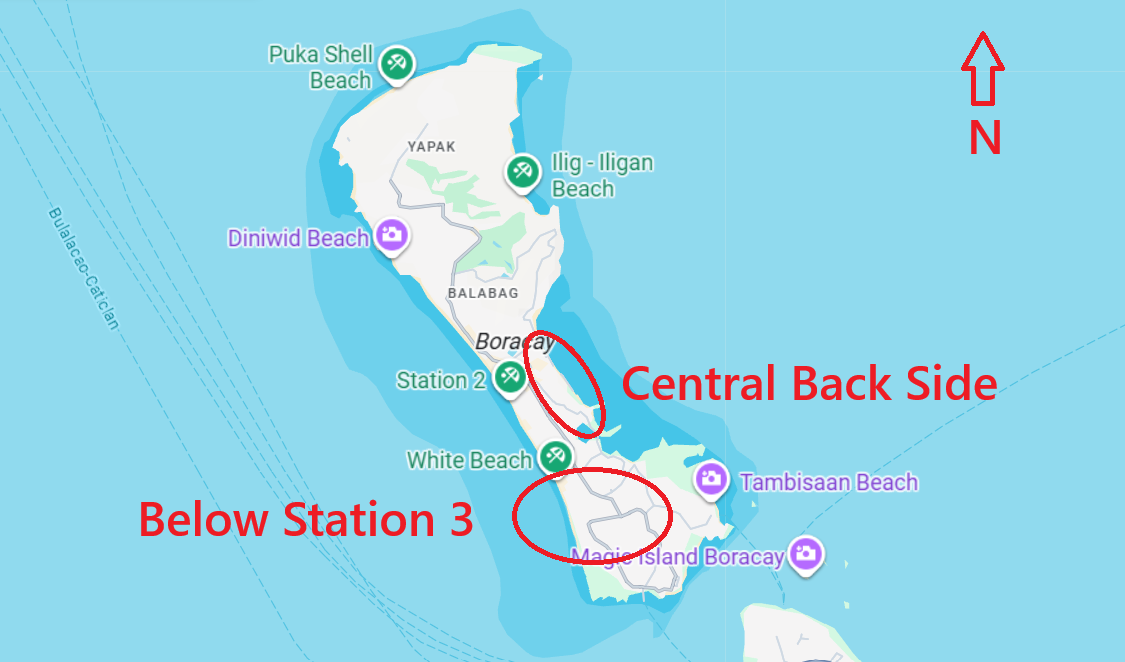
My first choice would be below station three on the west side of the island. The west side of the island has White Beach, which is the longest, most beautiful beach on the island. But most of the tourists are at Station 1 or Station 2, which is north of Station 3.
Station 3 tends to have more locals living there and long-stay expats, and it’s also not as expensive as other parts of the island. But when you’re ready for nightlife or international food, you just walk north up to Station 2 or Station 1.
We’re early risers, and we can go out on the beach south of Station 3; it is not unusual for there to be only a half dozen people before 9:00 AM. Ex-pats I’ve talked to in Boracay spend anywhere from about $1,500 to $3,000 USD a month.
If you want a lower cost of living and you want to be up in the mountains where it’s cooler, I have a bonus neighborhood for you in the Philippines.
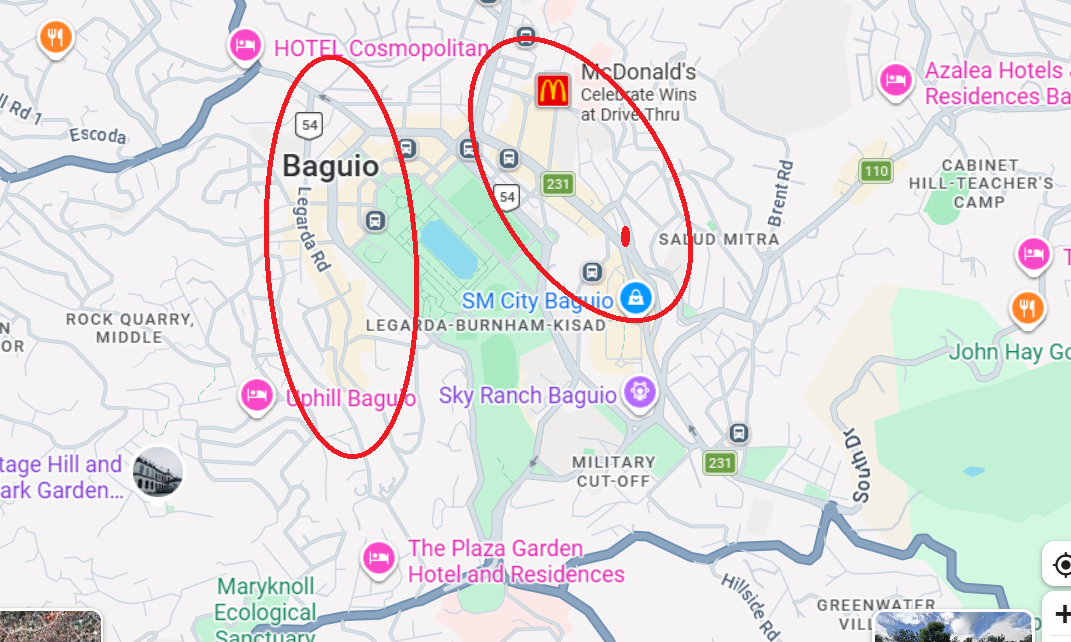
Baguio (Bonus Neighborhood): Baguio is a bonus neighborhood in the Philippines that is 1,400 meters (4,600 feet) above sea level. So it never gets too hot or too cold in Baguio. Baguio is surrounded by beautiful mountains, and it has greenery and farms growing delicious food in the hills around you.
There is a great assortment of restaurants. Everything’s walkable in the central area, and it’s a university town, so there is always something fun and entertaining going on. Our favorite neighborhoods are in the central part of Baguio where everything is walkable, as shown in the red circles.
Every city I am sharing with you today has a full report at vagabondbuddha.com that includes where we stayed, ate, and entertained ourselves.
Many Western countries do not need to apply for a visa to enter the Philippines. And once there, you can get up to 36 monthly visa extensions before you have to do a visa run.
Siem Reap (4th Favorite Neighborhood): Siem Reap in Cambodia is our fourth favorite neighborhood in Southeast Asia. Siem Reap is famous for being next door to Angkor Wat, which is the largest temple complex in the world.
The deserted temple city of Angkor may have been the most populated city in the world when the Khmer Empire fell in the late 15th century. There are about 72 temples in the deserted city. It’s one of the most peaceful places in the world.
Siem Reap Central is a perfectly walkable city. You have both local and international restaurants. There is a fun nightlife. There’s food from all over the world. And the city has a fun, festive feel to it.
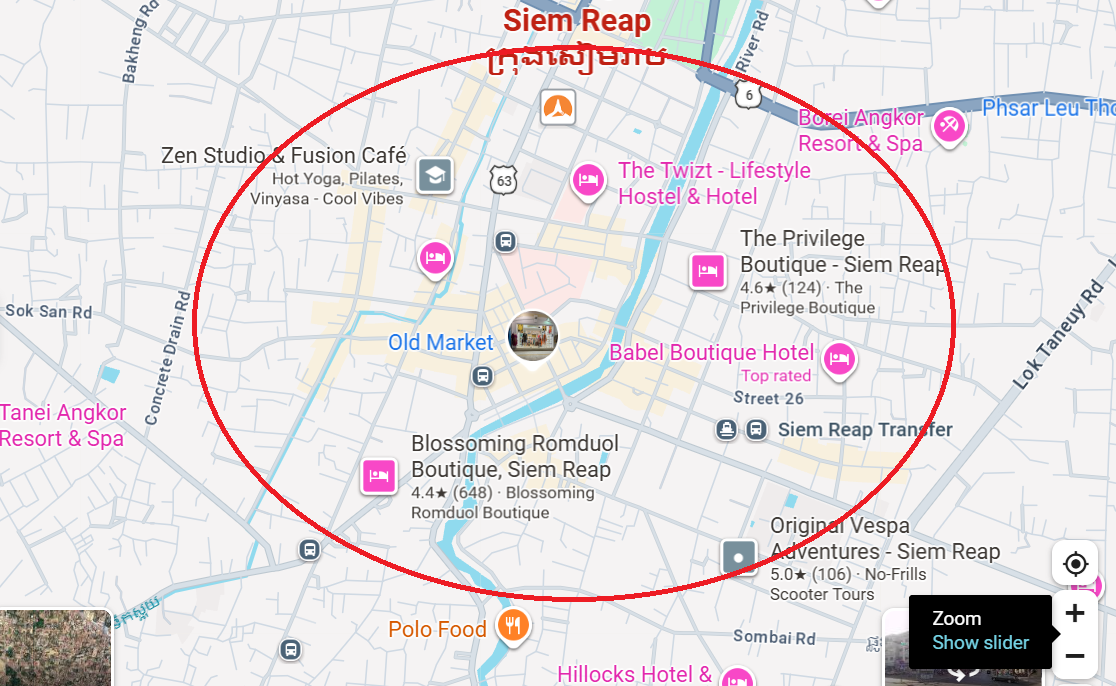

And there are still affordable neighborhoods within walking distance to the central part of Siem Reap, within 1 KM of the old Market. So you can walk everywhere. There are also tricycle taxis everywhere and grab taxis if you don’t want to carry bags of groceries home.
Most of the expats I’ve met there are living on about $1,000 to $2,000 per month. And there is an annual retirement visa available for about $300 per year. Right now there doesn’t seem to be any income requirement.
Kampot (Bonus Neighborhood): Kampot, Cambodia is a bonus neighborhood that we also enjoy greatly. It’s a quiet little city center, and everything is walkable. There are houseboats along the river in the center part of the city.
In the evenings, people enjoy watching the sunset over the mountains while they sit on top of the houseboats and have a beer or a cocktail. Old hippies never really die. They just moved to Kampot, Cambodia, and enjoy their sunset years.
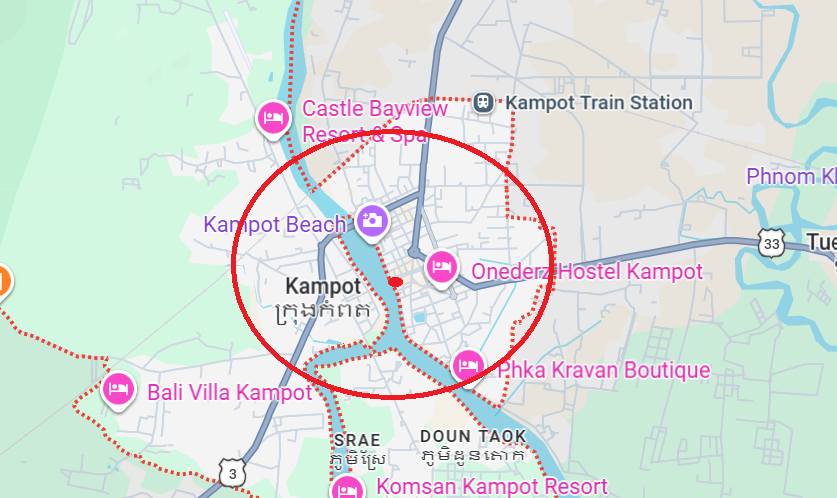

Just stay in Kampot central, and you will be able to walk to everything you need.
Kuala Lumpur (3rd Favorite Neighborhood): Kuala Lumpur has my 3rd favorite neighborhood in SE Asia. That neighborhood is the Quill City Mall and surrounding walkable areas.
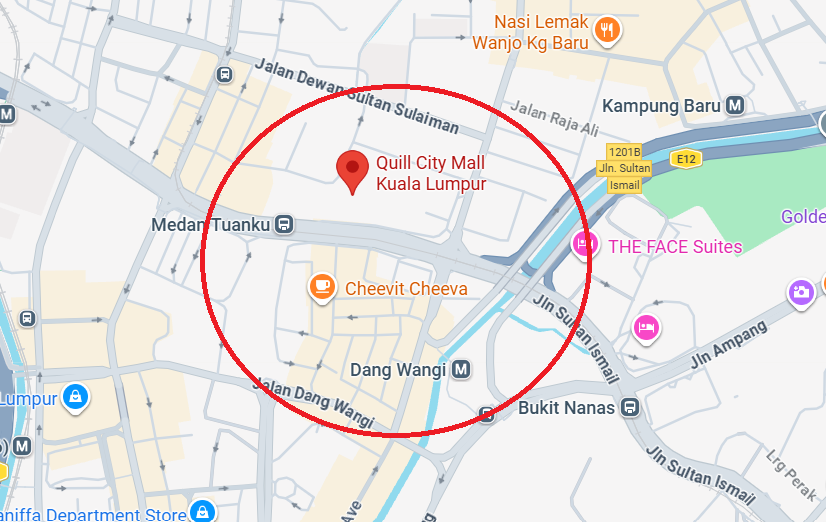
The mall itself has a great grocery store and multiple restaurants. Plus the neighborhood just south of the mall has a bunch of restaurants and things to do in the evening.
Plus there is a tram station in front of the Quill City Mall that will take you to all the best parts of KL in two, three, or four stops. So all the best parts of KL will be at your fingertips without worrying about parking or driving after you’ve had a drink.
Malaysia doesn’t really have a reasonable retirement visa anymore. But some people just slow travel around Southeast Asia in order to avoid getting retirement visas. In that case, Malaysia is a perfect place to spend 90 days every year as you slow travel around SE Asia.
Typical costs expats share with us for living in SE Asia for 90 days per year range from about $1600 to $2600 per month.
Georgetown, Penang (Bonus Neighborhood): The bonus neighborhood for Malaysia would be Georgetown, Penang, Malaysia. This is arguably one of the best foodie locations in all of Southeast Asia.
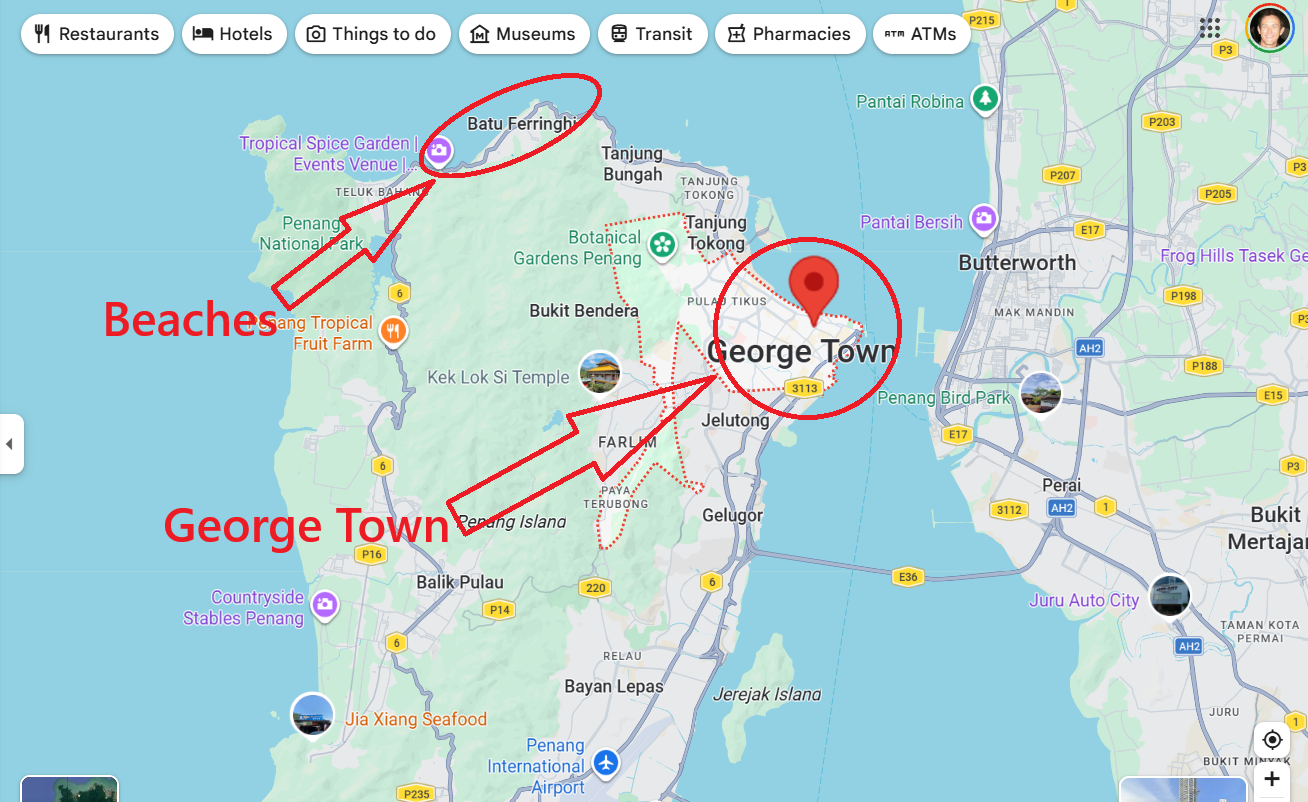
And the island is a nice mix of Indian, Chinese, and Malay, and all the food and all the culture are on this beautiful island. The northern part of the island is where some of the best beaches are.
But we usually spend time in Georgetown, Penang because of its colonial-era charms.
Okay, now it’s time for our top two neighborhoods in Southeast Asia.
Koh Samui, Thailand (2nd Favorite Neighborhood): Koh Samui, Thailand has our second favorite neighborhood.
It’s true that Koh Samui is one of the most expensive and internationally well-known places where well-heeled tourists go to enjoy their white sand beaches, turquoise water, and palm trees. But that’s mainly limited to the east side of Koh Samui.

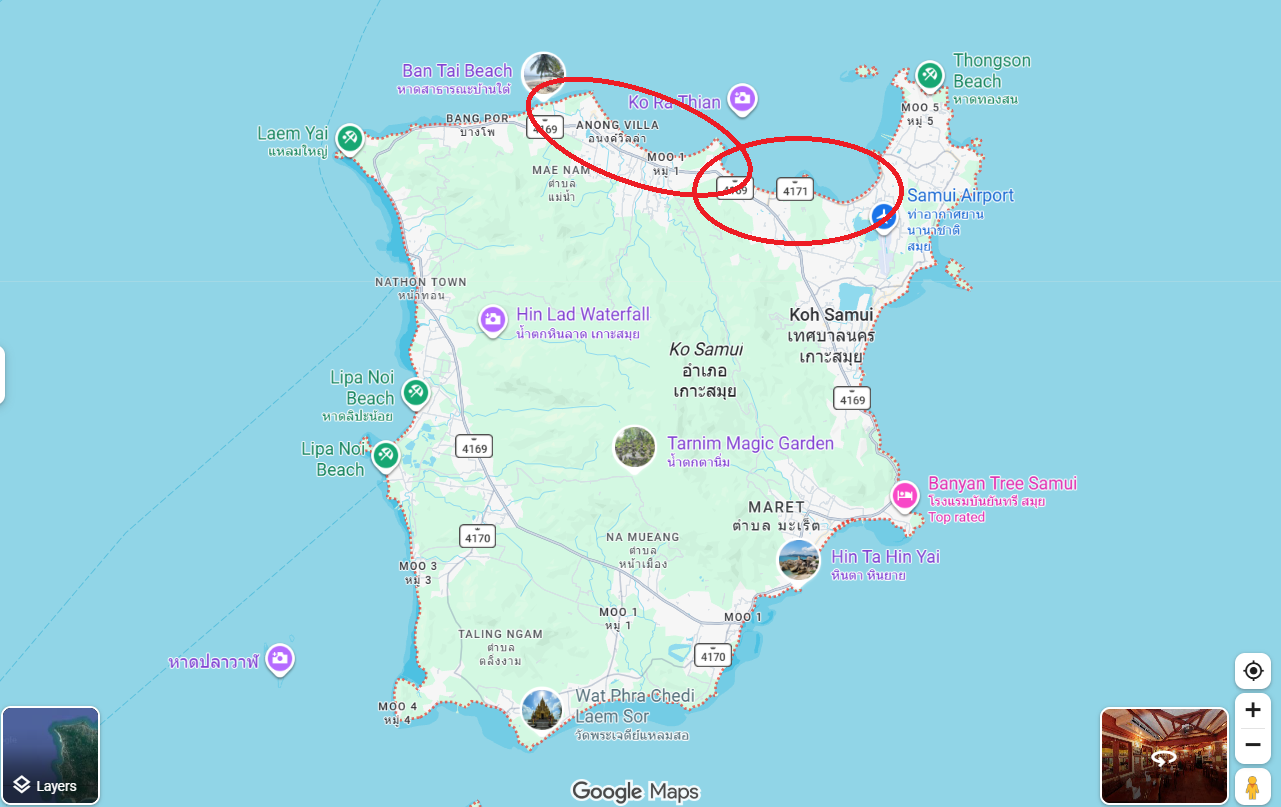
We stay more along the northern beaches that have some tourism but are not quite as expensive and have neighborhoods back on the beach that are actually quite reasonable.
Plus, unlike other parts of Thailand, the police are not pulling over ex-pats on motorcycles all the time, so long as you’re wearing your helmet. Along that northern beach, you’ll find both reasonably priced local restaurants and night markets and some international restaurants, which are more expensive.
Chiang Mai (Bonus Neighborhood): This neighborhood in Chiang Mai was where we found the right combination of both local affordable food and restaurants, shopping and markets, and also some international restaurants to choose from, and of course the night market.

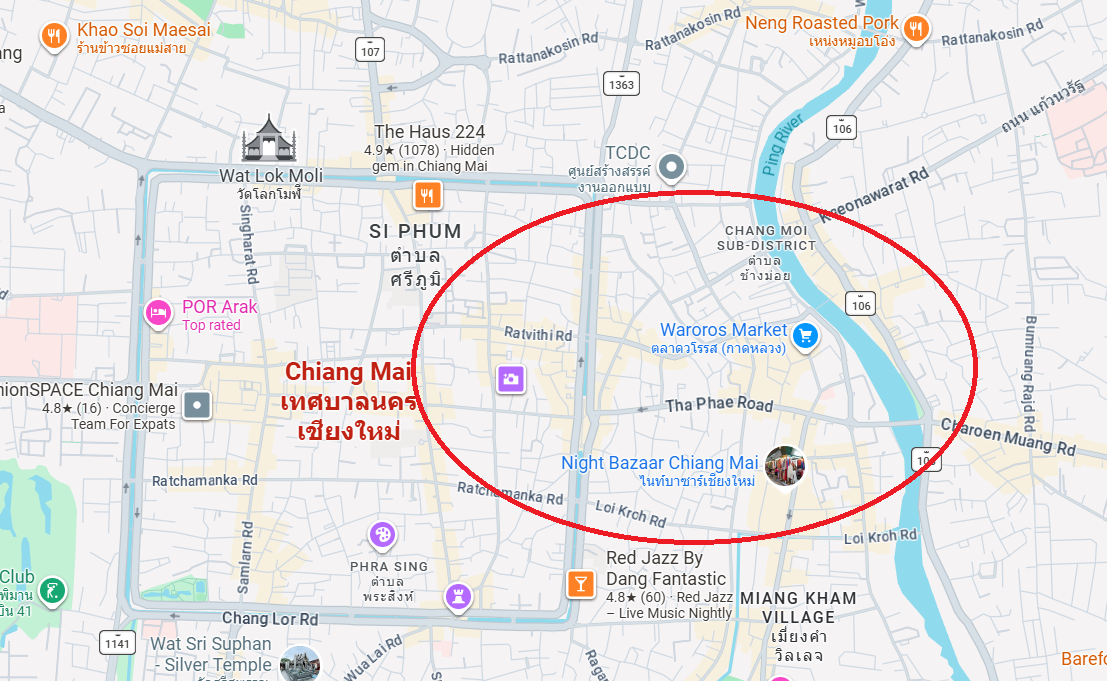
Make sure to leave Chiang Mai during the agricultural burn season in order to avoid a very smoky atmosphere. They burn the crops rather than till. So head south to the islands in the month of February and do not come back until April is over.
Okay, now it’s time for our number one favorite neighborhood in Southeast Asia for 2026.
Danang, Vietnam (#1 Favorite Neighborhood): Danang is presently our favorite neighborhood in Southeast Asia, and it’s for good reason. Vietam is one of the most joyful and affordable places in the world right now.
Prices have been rising over the last couple of years, but it is still very reasonable. Our favorite neighborhood of Danang is the My An Beach neighborhood.
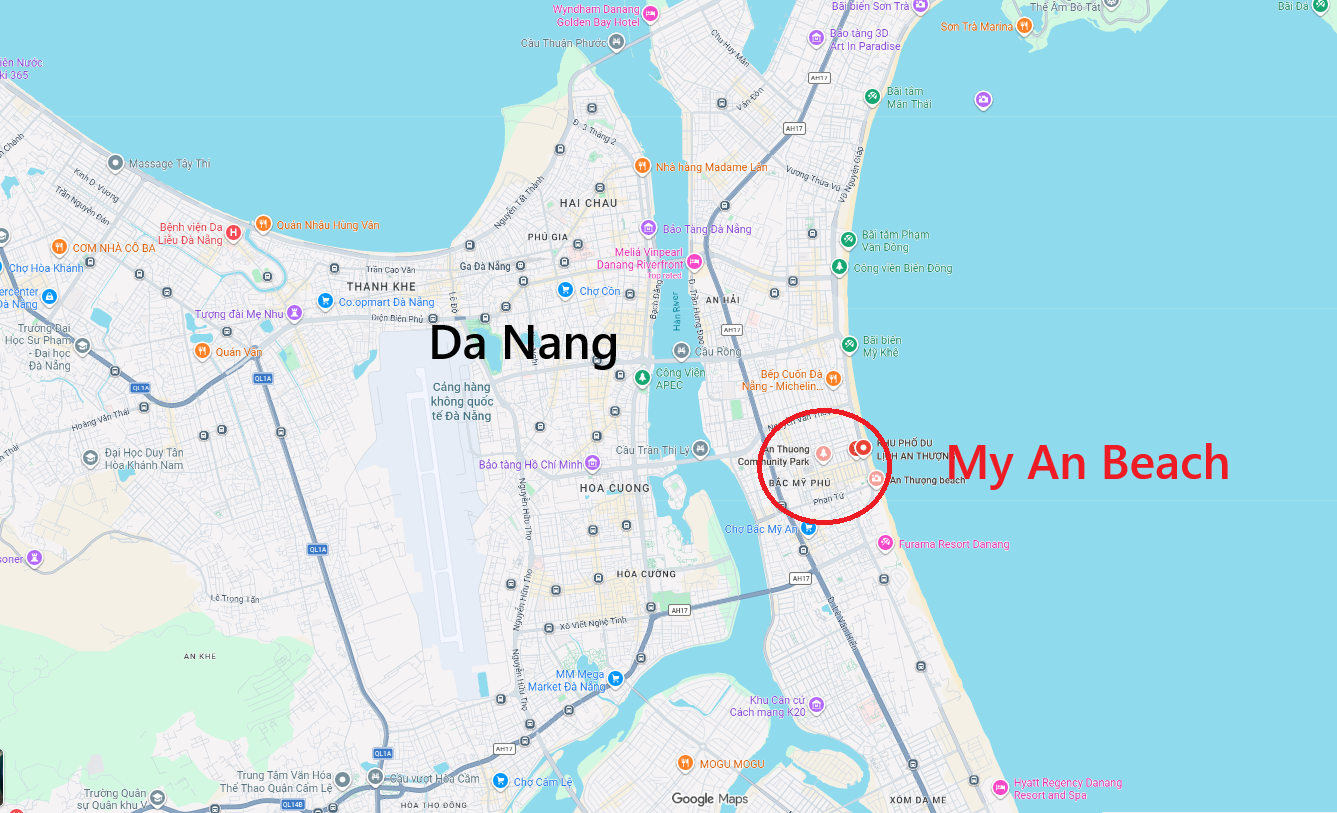

The first six blocks as you go away from the beach inland are very westernized. You will see burger houses, pancakes, pasta, pizza, Mexican food, sports bars, and lots of westerners.
But starting around the fifth block, as you continue east, you begin to see family-owned Vietnamese restaurants, coffee shops, food carts, and businesses that are more traditionally priced with Vietnamese customers, foods, and traditions.
So this is a perfect soft landing for people who have never lived outside their home country before.
It’s also a lovely place for local Vietnamese and for Westerners who want to be in the Vietnamese neighborhoods, pay Vietnamese prices, and live the Vietnamese lifestyle.
Just a few years ago, there were Western ex-pats living here, starting at around $800 to 2,000 per month. But as it becomes more popular, the prices have gone up and now average around $1,200 to 2,200 per month.
Many expats have lived in Danang for years. They do not have a retirement visa. So expats do a visa run every 90 days. There are visa agents that will bus you to the border for your visa run and get you a new visa every 90 days for about $150.
So your visa costs average about $50 a month.
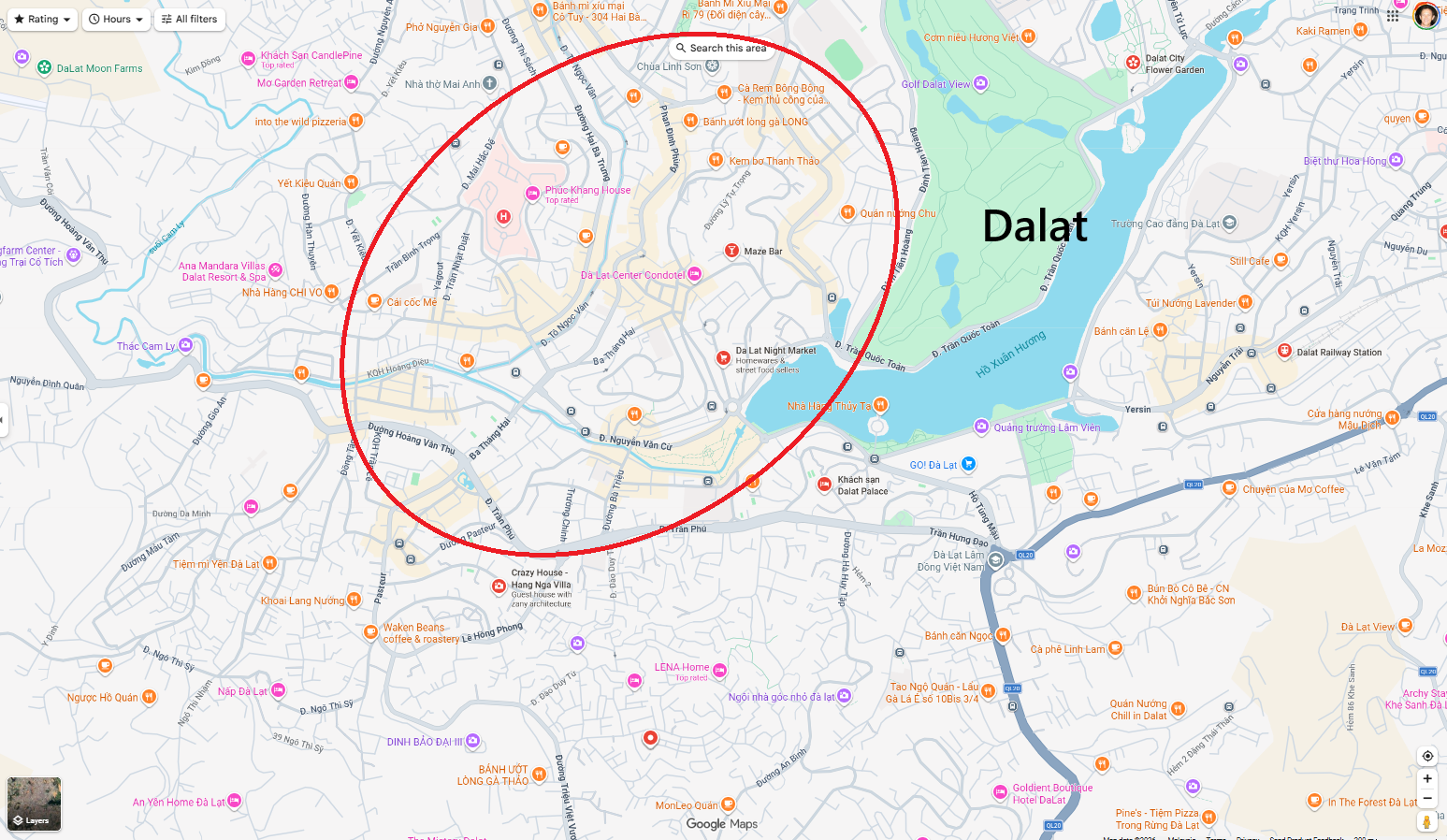
Dalat, Vietnam (Bonus Neighborhood): Our bonus neighborhood for Vietnam is called Dalat. Dalat is a hill station in Vietnam so it is much cooler. It has beautiful rolling mountains with wine country and agricultural land.
The lot is slightly cheaper. Ex-pats we meet living in the Dalat range from about $800 per month to $1,800 USD per month.
We do our best to stay well within the central part of the lot as shown.
Here are all our videos in Vietnam and all the expats we’ve interviewed there. And here are all our videos in Thailand and all the expats we’ve interviewed there. And scan this QR code to get your free copy of my e-book that teaches you what you need to do before you leave your home country.
Thank you for checking out our 5 Best Neighborhoods to Retire in Southeast Asia in 2026.