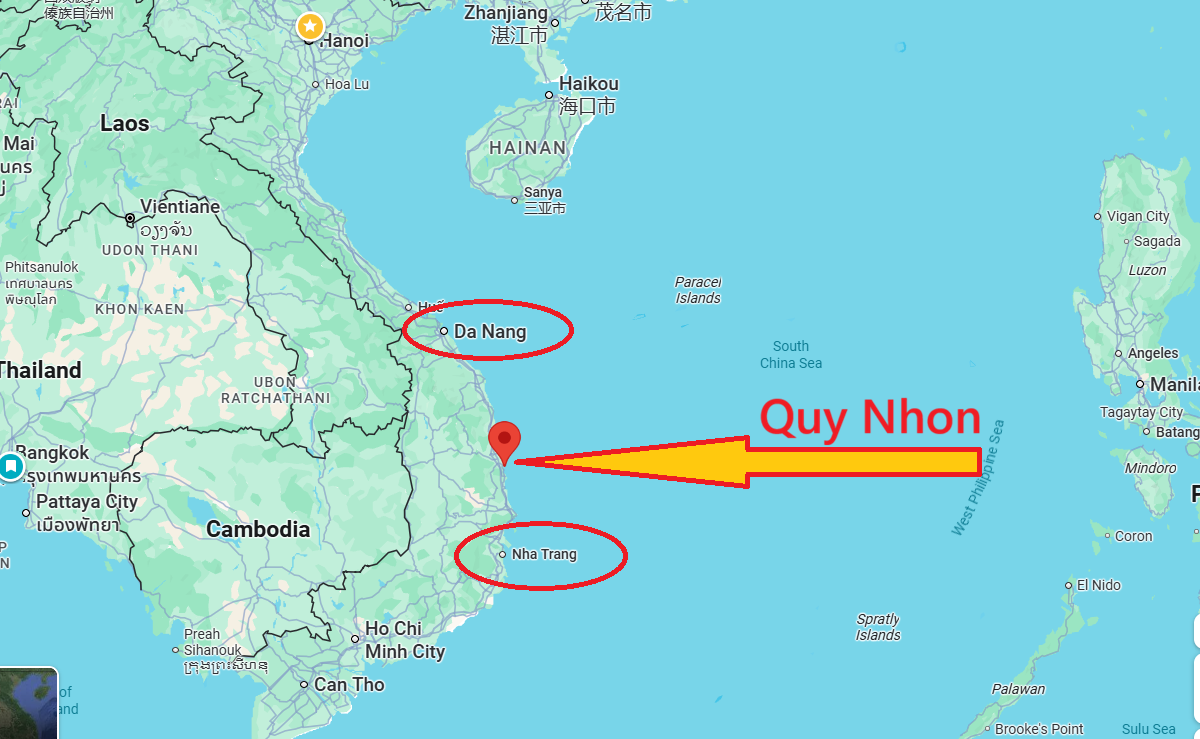
Quy Nhon is a lesser-known, smaller city on the coast of Vietnam, halfway between Da Nang and Nha Trang. But it has been getting more attention over the last two or three years.

When people first retire overseas, they often start in places that I call soft landings. A soft landing is a city that has a number of expats and locals who have adapted to serving expats. Soft landings are easy places to start a new life overseas.
Danang, Vietnam, has become one of the better soft-landing locations in Vietnam because there are so many expats. There is a neighborhood almost entirely dedicated to people who have decided to move overseas.
But some expats wander off the soft landing reservation once they understand what a country is really all about. Especially if they are looking for love and they do not want to compete with hundreds who are also looking for love.
I am going to show you living cost estimates for the low- to middle-range, and why some people are retiring in Quy Nhon, Vietnam, instead of more popular expat cities like Da Nang, Nha Trang, Ho Chi Minh, or Hanoi.

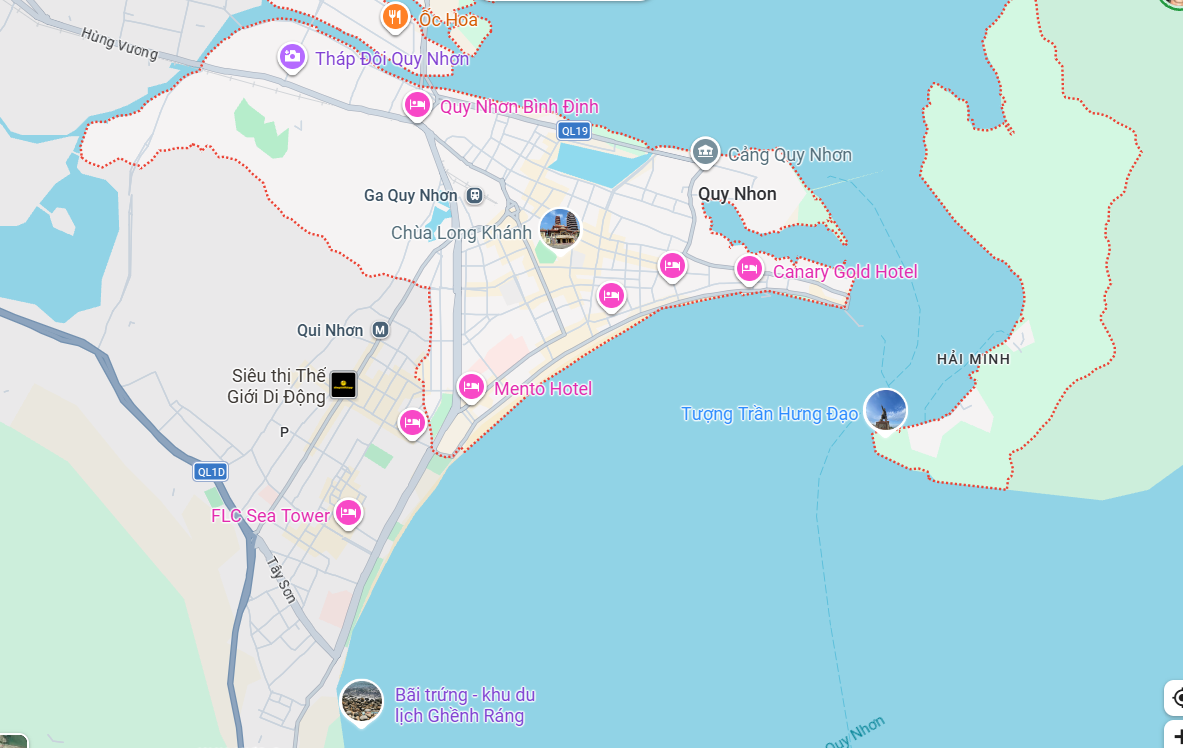
The video above will show you around Quy Nhon, so you know whether or not you are even interested in living or retiring here. In addition to the example cost of living, I will share visas, healthcare, walkability, weather, social considerations, things to do, and safety.
I’ve been going to Vietnam for over a decade. But this was my first time in Quy Nhon, making it the 11th city I have explored in Vietnam. I have lived outside the USA for 19 years. I travel the world and show you the best places to retire affordably overseas.
The beautiful woman you see in the videos with me is Qiang of the Hobo Ventures YouTube channel. Subscribe to Qiang’s channel if you want to see our daily lives as we move forward, slowly traveling the world on one-way tickets.
Quy Nhon Beaches

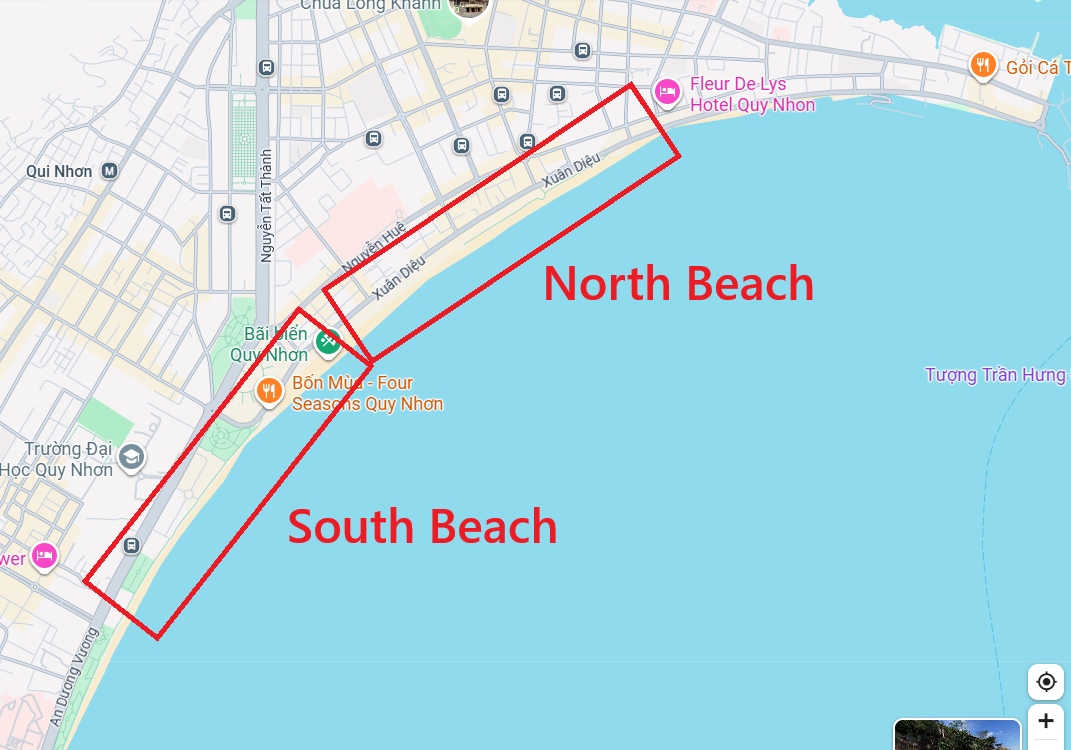
North Beach: The North Beach has slightly more Vietnamese tourists and a few expats. The North Beach also has craft beers, lawn chairs, and things you more typically see in tourist destinations.
South Beach: The South Beach also has tourists, and you will see an occasional expat, but overall it’s more local in nature. The South Beach is a more typical Vietnamese beach without lawn chairs on the beach, bars on the beach, or vacation-oriented things to rent like umbrellas, chairs, and water toys.
So pick your beach according to your mood. And I also recommend getting your accommodations within walking distance of the beach that fits your preferred beach lifestyle.
Must See in Quy Nhon
Z Beach Quy Nhơn: This is a great place to rent a beach chair and umbrella during the heat of the day or to relax in the evening with a reasonably priced adult beverage.
East West Brewing: Great place to people-watch, get some expensive expat food, and have an expensive expat beer.
Walk the Promenade at Night: In the evening, walk the concrete sidewalk along the beach. People watch and investigate anything interesting along the way.
Quy Nhon Food Street: There are multiple restaurants on this street. They block off cars, and people eat at tables that fill the street in all these different restaurants. It’s also a night market with souvenirs and t-shirts and that kind of stuff.
Nguyen Tat Thanh Square: Children roller skate in this large city square. The square commemorates the founding fathers of the city and country.
Favorite Day Tour
Our favorite day tour took us outside the city. They picked us up at our accommodations and drove us to a gorgeous white sand beach called Ky Co Beach. It included coral reef snorkeling, lunch at a local beachside restaurant, a walk along dramatic cliff views, and a Buddhist Monastery.
This Ky Co Beach Tour is available at any of the hotels or hostels in the city for about $30 per person. They pick you up at 8:00 AM and have you back in town by about 4 PM.
Estimated Cost to Retire in Quy Nhon, Vietnam
Property owners list long-term rentals (“cho thuê căn hộ”) directly on platforms like Batdongsan.com.vn and MuaBan.net, or across dedicated local real estate Facebook groups targeting 1-year contracts.

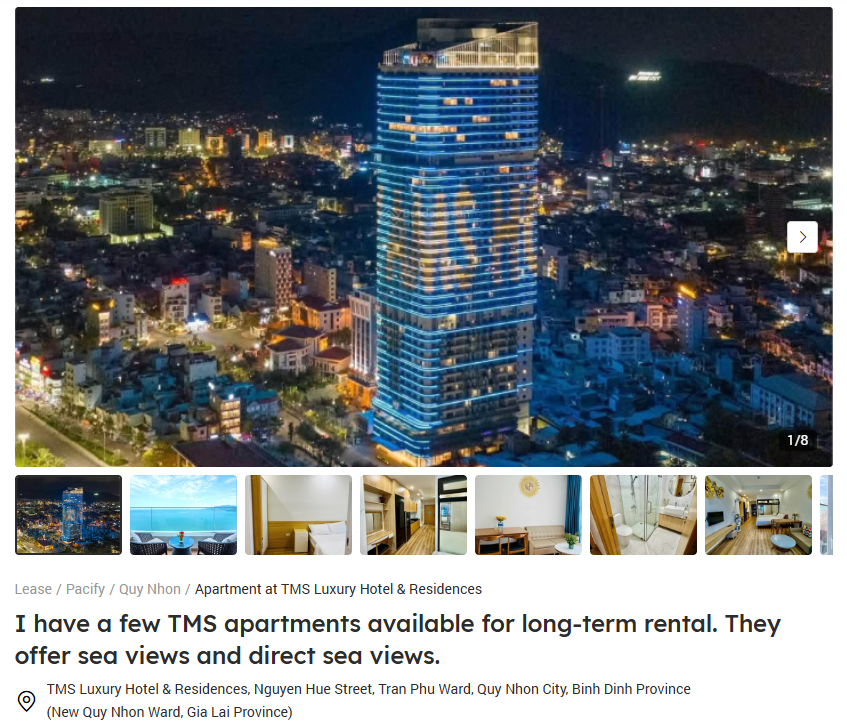
Rent: I found this 1-bedroom furnished apartment for rent in a nice area of Quy Nhon, near where we stayed. At the time of this report, it is advertised at $270 per month for a long-term lease. If you rent it for a shorter period of time on Airbnb.com, it would be much more expensive. If you moved here year-round, you would have to pay your own utilities. So, for the lower-cost-of-living estimate below, we estimate about $300 per month for a one-bedroom apartment, year-round. If you rent a larger apartment long-term, the rent would be higher, starting at around $600 USD per month or more, depending on the area and size. Here is the process we use to find great apartments.
Utilities: We estimate the year-round average for utilities for the smaller apartment above would be about $60 per month. Quy Nhon’s tropical climate means air conditioning adds to electricity costs. The utilities would cost more for the larger space, starting at around $110 USD per month.
Groceries: We estimate about $200 per month for the two of us. Other expats are likely to purchase more imported foods from their home country, spending $350 per month on groceries.
Restaurants: We would eat most meals out per week at local-style restaurants — ranging from about $2 to $4 USD per meal per person, and one or two splurges per month at $7 to $12 USD per meal per person at more typical expat restaurants. If you add it all up, we would spend around $278 per month on restaurants for the two of us. We may have a beer here and there, but that is covered below in alcohol.
Other expats are likely to eat more often at expensive restaurants and very little at local-style restaurants, so they would likely spend more like $500 per month for 2 people in restaurants. It is lifestyle-dependent.
Cell Phone Data: The cost to get a prepaid SIM card with 8 GB of data from Claro for your unlocked smartphone is about $8 USD per month. Other expat couples are likely to buy two prepaid SIM cards, so they would spend $16 USD per month.
Laundry: Many long-term rentals in Quy Nhon provide a clothes washing machine. People hang dry their clothes in Quy Nhon.
Drinking Water: 20-liter jugs of reverse osmosis water can be delivered for about $10 per month.
Internet: 30 Mbps in-home wifi is about $15 USD per month.
Transportation: We walked almost everywhere in Quy Nhon. We estimate about $30 per month for Grab Taxi. Stay away from renting scooters in Vietnam unless you are highly experienced.
Middle-range expats seem to want to rent or buy a scooter or a small car, so we will estimate $250 per month for them for gas and maintenance.
Alcohol (Optional): Local beer is about 27k Dong in local bars and restaurants ($1 USD) and about 18,000 Dong in stores ($0.72 USD). So, we would spend about $90 per month on alcohol for the two of us.
Other expats often spend more for imported foreign or craft beers in expat bars for about $3 or $4 USD each, so about $180 per month for two people, assuming they are not into imported whiskey or wine.
Entertainment (Optional): We would budget about $200 per month for the two of us. We generally enjoy doing more do-it-yourself kinds of entertainment, so other expats would spend a little more, maybe $300 per month, for 2 of them.
Estimated Costs to Retire in Quy Nhon, Vietnam
After the cost of living, I will share information on visas, residency, real estate, walkability, healthcare, and safety. The first link in the first comment below this video provides details on how I arrived at each line-item cost.
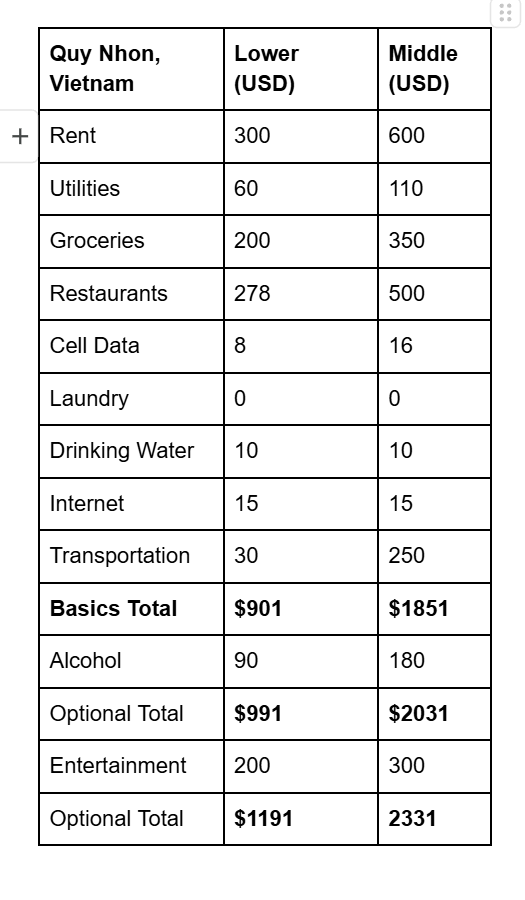
We gathered this data with our feet on the ground here in early 2026, so adjust for inflation after that. The above lower cost-of-living estimate would apply if the two of us lived here on a tight budget. The middle estimate is just an example of what more typical expat couples might spend if they moved here.
What would it cost you to live in Quy Nhon?
To understand what it would cost you to live here, you must put your feet on the ground, see how you would choose to live, eat, and entertain yourself, and add it all up. It doesn’t matter what anyone else spends because we are all different.
You should also add anything to the above table that you spend money on in your home country that is not listed in the above table. Presumably, you find those things necessary in life. To do that, visit the Numbeo Quy Nhon page and add anything not mentioned in the above table. Anything not on Numbeo you should add during your exploratory visit before moving.
Never move anywhere until you have visited first personally to verify the living costs for your lifestyle and needs. I am not guaranteeing these prices. These are just my notes and estimates from the time of my visit and this post. Your costs will likely be drastically different depending on your lifestyle and the time since this post was published.
Typical expats’ living costs in Vietnam range from about $1,000 to $3,000 per month, depending on their lifestyle, budget, and whether they live in a city, coastal, or rural area.
Favorite Day Tour
The most beautiful beach we saw while in Quy Nhon was on a tour that took us outside the city. They picked us up at our accommodations and drove us to a gorgeous white sand beach called Ky Co Beach. It included coral reef snorkeling, lunch at a local beachside restaurant, a walk along dramatic cliff views, and a Buddhist Monastery.
The tour is called the Ky Co Beach Tour, and it is available at any of the hotels or hostels in the city for about $30 per person. It starts around 8:00 AM, and you’re back at your hotel to sleep by 4:00 or 5:00 PM.
Quy Nhon, Vietnam — Livability Factors
Before you move anywhere outside your home country, make a list of the factors you must have for a happy retirement. Here are my livability factors, and I will rank each as high, medium, or low before assigning an overall retirement desirability score for Quy Nhon.
Walkability: High. In Quy Nhon, everything is so centralized that we would rarely need to walk more than 20 minutes to get what we needed for everyday life. Plus, walking is the healthiest way to stay in shape as we age. Most retirees here rely on Grab, walking, a scooter, or a small car for anything beyond their immediate neighborhood.
It can be too warm to walk in the hottest time of day. So we live the Siesta lifestyle during the hottest time of the year. We are out walking early morning and then again in the evening when it cools down.
Internet: High. The in-home Wi-Fi in our apartment was about 60 Mbps. Good enough for Zoom calls, uploading YouTube videos, and watching Netflix. We were also able to use our cell phones as hotspots when we were out of the house together.
Food: Medium. We found some decent restaurants in Quy Nhon, but it is not as diverse as is available in larger cities or in soft landing cities like Da Nang. That is to be expected whenever you go to smaller cities in SE Asia.
Weather: High. We love the weather here. Average daily highs range seasonally from 80F/23C in December to 94F/C34 in August. Average nightly lows range seasonally from 71F/21C in January to 81F/27C in June. The rainy season is September through December when at least some rain falls 11 or more days each month (16 days in October and November). If the heat is ever too much, just take a trip up to Da Lat, Vietnam to cool down. It is 4500 feet above sea level, and rooms start at around $18-$20 per night. View our Da Lat report to know where to stay, eat, and play in the cooler weather.
Things to Do: Medium. Beaches, boats, fishing, hiking, biking, markets, learning to cook Vietnamese, meditation, yoga, exploring restaurants, archaeological exploration, trips around Vietnam and SE Asia, snorkeling, scuba, coffee shops, martial arts, exploring coffee shops, and nightlife.
Social Considerations and Expats: Medium. There are about 10k people who have joined the three Quy Nhon Facebook Expat Pages. Page 1, page 2, and page 3. There are often local people who also join Expat pages, but there should be enough people here to live an entire expat social life if that is your thing.
Even if you are less expat-oriented like me, these Facebook Resources are still great resources to find odds and ends that you miss from home. They are also a great place to buy and sell things, find a place to live, and find out things that only a foreigner who has lived in Quy Nhon for a few years would likely know about or be looking for locally.
English is not commonly spoken when you get outside the soft landing areas and tourist areas of Vietnam. Make sure to learn how to use Google Translate before you head to Vietnam if you plan on spending time outside the tourist areas.
Safety: High. We don’t spend much time talking about safety in Vietnam because it feels like one of the safest countries in the world to us.
Also, the US State Department seems to agree with our observations, and it is labeled as level one: exercise normal precautions. Here are my thoughts on how to remain safe all over the world.
Medical: Medium. Historically, wealthier Vietnamese would often travel to Bangkok, Kuala Lumpur, or Singapore for significant healthcare challenges. But over the last decade, Vietnam has slowly been raising its game medically. Qiang and I have both been to the hospitals in Vietnam, and we’re happy with both the price and the services. They have new equipment, clean, beautiful hospitals, and they have translators if the doctor doesn’t speak English, which some do. We’ve interviewed expats living in Vietnam who have had various treatments, including cardiovascular treatments and cancer treatments, and they were happy with the price and quality of service. If you’d like to learn specific examples of the kinds of prices and services expats are receiving in Vietnam, watch our Vietnam YouTube playlist.
Tourist Visa: High. If you want to visit Vietnam as a tourist, most countries, including Western countries, have to apply for a 90-day visa online. It cost $25. There is no interview and it seems like everyone who applies seems to get approved. The only people that I know of having trouble getting back into Vietnam are people that created problems during a previous visit to Vietnam. Like most countries they have also started requiring you to fill out a digital arrival card about two days before you enter. Both the Visa and the Digital Arrival Card seem to be just administrative things.
Retirement Visa: There is no retirement visa in Vietnam. There are over 100k foreigners living in Vietnam year-round. About 20% have marriage, business, or work visas. The other 80% do visa runs every 90 days.
That may seem crazy to you, but if you lived in Vietnam, a visa run would be about as hard as flying from Miami to Orlando on a $100 roundtrip airfare for a long weekend, 4 times per year. These countries are that close.
So people that know how great it is here in Vietnam just see it like 4 short, easy, fun vacations. Some people say you can’t retire here for those reasons. But we meet people here all the time who have been in Vietnam for many years.
How could this happen? Well, people tour around Southeast Asia and decide Vietnam is their favorite country. Then they compare all the retirement visa paperwork hassles in other countries and decide they’d rather be in Vietnam on visa runs than filling out forms.
So after you’ve completed your exploratory visits to all the countries in Southeast Asia, you can decide for yourself: Do you want to fill out paperwork or do you want to do visa runs?
Real Estate: Foreigners can get a 50-year lease on condos but cannot own or lease land in Vietnam. No more than 30% of the condos in a project can be leased to foreigners. We recommend that nobody even consider acquiring real estate in a foreign country until they have lived there at least two or three years.
Quy Nhon Overall Retirement Desirability Score
I would give Danang a high score for retirement desirability for someone who has already spent a year or two in a soft landing like Danang, or Ho Chi Minh, or Nha Trang, or Da Lat.
It’s probably not right for a newcomer, especially if you’ve never lived anywhere overseas before. But after you’ve been in Vietnam a year or two, after you love the food and you love the culture and you love the people, but you’re looking for a smaller town on the coast at more reasonable prices, this is a great pick for you.
As always, come do an exploratory visit before you make any final decisions.
Where We Stayed
We stayed in the Mio Hotel in Quy Nhon. The price was right and it was near everything. This is not an affiliate link.
Restaurants, Services, Markets (27k Dong = $1 USD)
Services/Markets/Resources
- Dieu Tri Railway Station: This is the closest train station to Quy Nhon. We took the train here from Da Nang. We bought the tickets at the Da Nang station for $16 each.
- VP Bank: Can withdraw up to $10M Dong ($381 USD)
- Chợ Đầm Quy Nhơn: The Main Market
- Market 2: smaller market
- Quy Nhon Food Street: Fun place to go at night to eat street food and to people watch
- Gym and Fitness Nghĩa Hà CN 86 Lê Duẫn: Gym. 450k / month
- Mio Hotel: Where we stayed.
Restaurants/coffee/beer:
- SEASAND COFFEE LOUNGE: Best spot, beer on the beach 25k
- TCV COFFEE & CRAFT BEER: Craft beer 22k
- Quy Nhon Sports Bar: Quy Nhon local beer 25k, draft beer 109k, Fries 79k
- Zbeach Quy Nhơn: Summer craft beer bottle 80k
- East West Brewing: 330ml craft beer 95k, 500ml135k, Shaking beef 245k, Garden salad 155k, Tasting flight 4 beers 195k
- Surf bar: coconut 60k
- Mixue Xuân Diệu: Ice cream 25k, lemonade 15k
- ATANI COFFEE: Salty milk coffee 27k, Ice coffee 30k
- Ốc Tê Quy Nhơn: Quy Nhơn beer 9k, Fried tofu 69k, Grilled apple snail 75k, Fried garlic cockle 75k, best restaurant. Great people watching.
- Bốn Mùa – Four Seasons Quy Nhơn: Smoked duck 255k, garlic fried spinacy 85k, rice 15k , beer 25k
Vegetarian:
- Ẩm thực chay Thanh Lương: 30k for noodles
- Cơm Chay Gia Tuệ: 20-22k for noodles
- Ẩm Thực Chay Minh An: Broken rice with soup 28k